Natural Stone Polishing vs. Honing: What’s the Difference?
As a cleaning company serving clients across Texas for 22 years, we’ve seen plenty of homeowners come to us confused about the same two things. The mix-up between polishing and honing is one of the most common one.
In this guide, we’ll cover every difference between honing and polishing and which finish suits each type of stone best. Whether you’re choosing for furniture, a countertop, or any other surface in your home, this will help you make the right choice.
We’ll look at several types of stone, including limestone, marble, granite, travertine, and slate. For each one, we’ll share the best cleaning solution, so you know how to care for it whether it’s polished or honed.
Key Takeaways
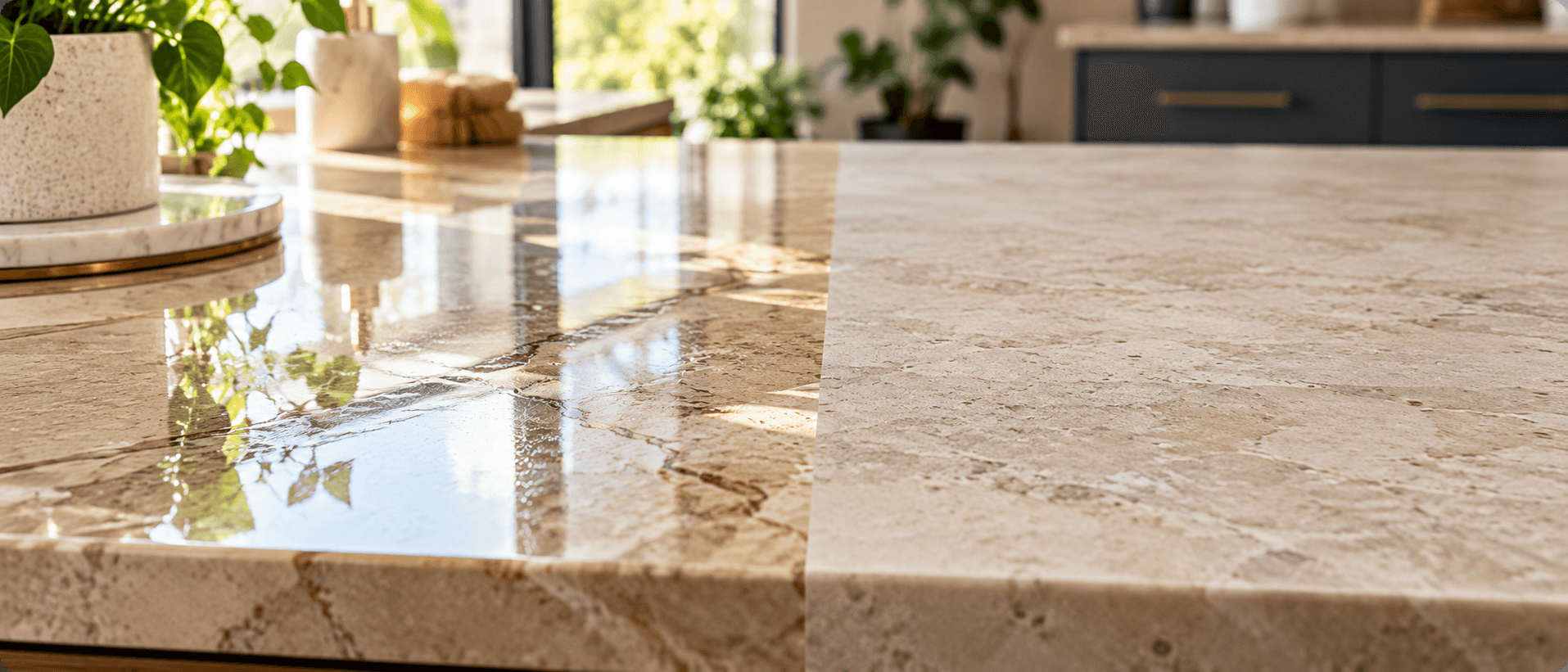
- Polishing means a glossy finish with deeper color, and honing means a soft matte or satin finish.
- Honed stone hides scratches and etching better than polished stone.
- Polished stone can get slippery when it’s wet, so keep that in mind for bathrooms and entryways.
- Granite looks best polished, while marble, limestone, and travertine usually look better honed.
- Every stone needs its own cleaner, and using the wrong one can ruin the finish.
- Dull or damaged stone can usually be restored by a professional so you don’t have to replace it.
What Is Stone Polishing?
Using finer abrasives on a stone until it reflects light is called stone polishing. It’s a process you need when you want your stone to be very smooth, glossy, and have a mirror-like finish. Polishing also makes the stone’s color look deeper and more vibrant.
A polished stone is known for:
- A high-gloss shine and rich color
- A formal, dramatic look
- A smoother surface that is often easier to wipe clean
It’s best for granite countertops, marble in low-traffic areas, formal entryways, and spaces with plenty of natural light. So if you have any of these, getting your stone professionally polished is the best choice if you want a like-new finish.
What Is Stone Honing?
Stone honing is almost the same process as polishing, but it’s done in way less time. You use it when you want a flat, matte or satin finish with a soft, muted look, instead of the vibrant, shiny look that comes with stone polishing.
A honed stone is known for:
- A low-sheen, natural appearance
- Better camouflage for minor scratches and wear
- Less glare and a more relaxed, casual feel
It’s best for marble, limestone, and travertine floors, busy kitchens, and anyone who prefers a softer look over a mirror-like shine. If that sounds like you, take a look at our natural stone honing service.
Polishing vs. Honing: Key Differences
| Polished | Honed | |
|---|---|---|
| Appearance | Glossy, reflective | Matte or satin |
| Color depth | Enhanced, vibrant | Softer, more muted |
| Shows scratches | More visible | Less visible |
| Shows etching | Very visible on marble | Less noticeable |
| Slip resistance | Can be slick when wet | Generally better underfoot |
| Style | Formal, dramatic | Casual, natural |
Which Stones Suit Which Finish?
The kind of finish that suits a stone depends on the stone itself, and there are several common ones we work with, including granite, marble, limestone, travertine, and slate, so let’s go through them one by one.
Granite: Granite is hard and dense, so it holds a polish really well, and that’s why polished granite is the most popular choice for kitchen countertops. To clean it you can just use warm water with a few drops of mild dish soap, or a cleaner made specifically for granite, and you should avoid vinegar and lemon based products if you want to keep the shine stable.
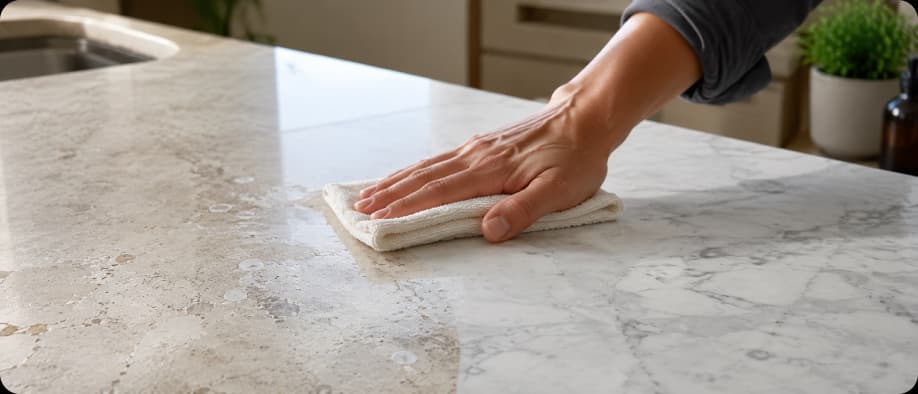
Marble: Marble can be either polished or honed. Polished marble looks luxurious but shows etching fast, so it works best in low traffic areas, while honed marble has a more muted, low effort kind of shine and it works best for kitchens and bathrooms. For cleaning, use a pH neutral stone cleaner, because acidic cleaners will dull and etch it so don’t use them. If it’s already dull, our natural stone cleaning team can take a look.
Limestone: Limestone is a softer and more porous stone, which is why it usually looks best with a honed finish. Because it soaks up liquid easily, spills can sink in and leave stains if you let them sit, so clean it with a pH neutral stone cleaner and wipe up spills quickly. Stay away from acidic products since they can dull the surface.
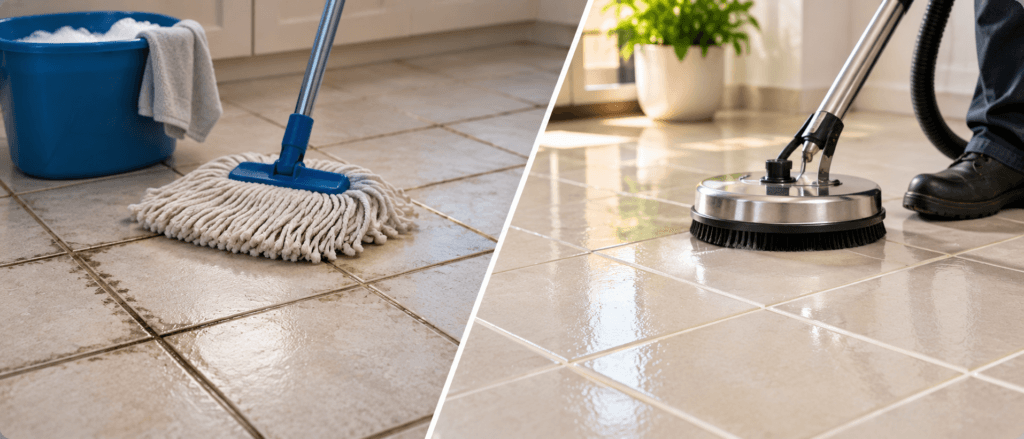
Travertine: Travertine has natural pores and holes, and it’s most often honed for floors and patios because that soft natural look suits it well, especially outdoors. Use a pH neutral cleaner and a soft mop, since harsh cleaners can damage the surface and pull out the filler, so it’s best to keep things gentle. If the filler has already come out, natural stone hole filling can repair it.
Slate: Slate has a naturally textured, layered surface, so it’s rarely polished, and most slate is left natural or honed which keeps its earthy look. Clean it with a mild stone safe cleaner and avoid anything acidic, because strong chemicals can break down the surface over time.
Why Does Stone Lose Its Finish?
Honestly, every stone loses its shine at some point, even the expensive stuff. Most of the time it’s just grit from shoes. You don’t see it, but it’s like walking sandpaper across your floor every day. Then somebody spills wine or orange juice and leaves it for an hour, and now there’s a dull ring that won’t wipe off. That’s etching. Cleaning products do it too, and a lot of people don’t realize their bathroom spray is the problem. Add hard water spots, plus a few years of little scratches, and one day you’re standing in your kitchen thinking, when did this get so dull?
Can You Switch From One Finish to the Other?
Most of the time, yeah. We can hone the stone first to get rid of the damage, and then it’s up to you. Some people love the soft matte look once it’s done, and others want the shine back, so we polish it up. It depends on the stone and how bad the damage is, so we like to look at it in person before promising anything. You can request a free in-home quote and we’ll check it for you.
Conclusion
Polished stone rewards you with depth and drama, as long as you accept the extra wiping and the way it shows every flaw. Honed stone gives up some of that glamour in exchange for a surface that forgives daily life. Neither is better in the abstract. A dense granite counter and a limestone floor will each tell you which finish they want, and the room’s traffic, light, and moisture will settle most of the rest.
If your stone has already lost its finish, that isn’t a verdict on the finish you chose. Etching, cloudiness, and wear can usually be corrected, and it’s a good moment to reconsider whether the original look still suits how the space gets used.
Frequently Asked Questions
What’s the main difference between polishing and honing?
Honing stops earlier. Polishing keeps going until the stone shines like a mirror, and honing leaves it flat and soft, with a matte or satin look.
Which one hides scratches better?
Honed. Polished stone is so shiny that even a small scratch catches the light and stands out. On honed stone, most of them just blend in.
Is polished stone slippery?
It can be, especially when it’s wet. Honed stone usually feels better underfoot, so it’s the safer pick for bathrooms and entryways.
Can I polish my marble countertop myself?
I wouldn’t. It looks easy, but it takes the right pads, the right machine, and a good feel for pressure. If you get it wrong, you end up with swirl marks or a blotchy shine that’s hard to fix.
Can you turn polished stone into honed stone, or the other way around?
Most of the time, yes. We hone the stone first to get rid of the damage, and then you decide if you want to leave it matte or polish it back to a shine. It depends on the stone and what shape it’s in, so we like to see it in person first.
What’s etching, and can it be fixed?
Etching is those dull marks you get when something acidic, like wine, juice, or lemon, sits on the stone. They usually come out with honing or polishing, as long as it’s not too deep.
Do I need to seal my stone after it’s done?
Yes, we always do. Sealing helps keep spills from soaking in, which gives you more time to wipe them up before they stain.
How often does stone need to be redone?
It really depends on how much foot traffic it gets and how it’s cleaned. A busy kitchen floor will need it sooner than a quiet entryway.