Wool Rug Cleaning Mistakes That Can Ruin Your Rug
If you’re about to clean a wool rug with a DIY trick or a store-bought cleaner, stop for a minute. A lot of wool rugs get ruined at home by methods that work fine on carpet. That’s exactly why I’m putting in my years of rug cleaning experience and explaining every potential mistake you can make. We’ve seen countless situations where the homeowner tries to clean it themselves and it ends up coming to us, in a much worse situation than they started with.
Key Takeaways
- Wool is a natural fiber, and many carpet cleaning methods can damage it.
- Store-bought cleaners, too much water, rental machines and scrubbing are the most common ways wool rugs get ruined.
- After a spill, blot or pull the liquid out with a wet-dry shop vacuum. Never scrub.
- Dye bleeding and browning can often be corrected if you stop experimenting early.
- Every wool rug should be dye tested before it’s cleaned.
Why You Can’t Clean a Wool Rug Like Carpet
A carpet and a wool rug can look alike because they’re used the same way, but they need very different cleaning. Synthetic wall-to-wall carpet handles standard cleaning well. Wool is a natural fiber, and a method that’s safe for carpet can permanently damage a wool rug. The dyes, the way the rug is made and its current condition all decide what’s safe.
Here’s a table to help differentiate:
Synthetic Carpet vs Wool Rug: How Cleaning Differs
| Feature | Synthetic wall-to-wall carpet | Wool area rug |
|---|---|---|
| Fiber | Man-made fibers like nylon, polyester or olefin | Natural fiber |
| Construction | Mostly the same build from room to room | Varies a lot. Hand-knotted, tufted, flatwoven, and some with glued-on backing or fringe trim |
| Dyes | Usually stable through standard cleaning | Can run or move during cleaning, so they need testing first |
| Water | Handles standard wet cleaning | Too much water can make dyes move, cause yellowing or browning, and break down glued backing |
| Household cleaners | Most store products are made for it | Many can make dyes run or discolor the wool |
| Cleaning products | Standard carpet detergents | Wool-safe products with pH neutralization |
| Drying | Dries in place on the pad | Thick foundations hold water, and the rug isn’t done until the backing is fully dry |
| Cleaning method | One standard method works for most carpets | Chosen rug by rug after checking the construction and testing the dyes |
The Mistakes I See Most Often
I’ve been in the cleaning industry for 20+ years now, so I know what mistakes people commonly make. In this section we’ll cover each in detail, one by one.
Using household carpet cleaners and spot removers
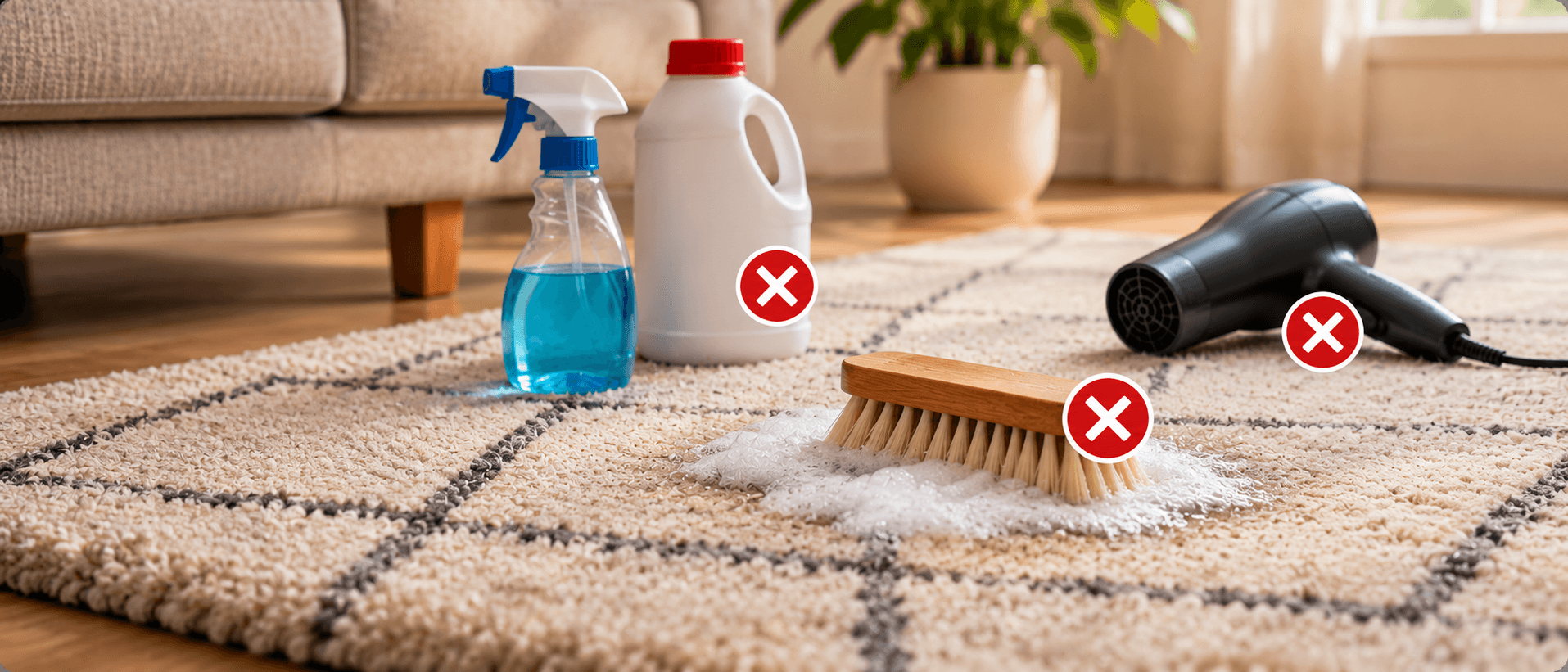
This is the number one mistake homeowners usually make. Using products to restore your rug can seem easy but it may make the job harder than easier. Store-bought carpet cleaners and spot removers contain cleaning agents that can affect wool dyes. This means they can discolor the rug or cause its color to bleed out.
Leaving soap behind
When the cleaner is not fully rinsed out, the leftover soap can attract dirt much faster than before. It’s very important to have the soap residue fully cleaned out. This is why you need to make sure that you are rinsing the rug properly.
Using too much water
People often assume more water means a cleaner rug and I have seen homeowners try to clean their rug with the garden hose or pressure washer due to this. But it’s actually the opposite: too much water makes dyes move, turns the rug yellow or brown and breaks down the glue at the back so it barely helps.
Renting a carpet cleaning machine
Rental machines are made for thin wall-to-wall carpet, not thick wool rugs. They don’t have enough suction power to remove water from the thick layers of a wool rug. The bigger problem is how people use them. Repeated wet passes push water deep into the rug’s foundation, where it can make colors run, turn the rug brown or yellow, loosen glued backing, and keep the rug wet for a long time.
To be fair, not every wool rug is ruined this way. But the risk goes up a lot for handmade, antique, or valuable rugs. Before I clean any rug, I identify how it was made and test the dyes first. If you’re weighing a rental against hiring a pro, our guide on how much area rug cleaning costs in Fort Worth can help you compare. For independent guidance on wool care, WoolSafe publishes The Cleaning and Maintenance of Wool Carpets.
Scrubbing a spill
When something spills, the instinct is to scrub. Please don’t. Scrubbing distorts the wool fibers and damages the pile, and once that happens it’s hard to fix. Blot gently with clean white towels instead, or pull the liquid out with a wet-dry shop vacuum. WoolSafe also has emergency spill advice for wool that backs this up.
Trusting vinegar or baking soda
Home remedies like vinegar and baking soda get recommended a lot online, but they aren’t safe for every wool rug. It depends on the dyes, the construction, and the condition of the rug. What works on one rug can damage another. If you’re not sure, it’s safer to contact us before trying anything.
| Mistake | What it does to the rug |
|---|---|
| Household carpet cleaners and spot removers | Can make dyes run or discolor the wool |
| Leaving soap behind | Leftover residue attracts dirt faster |
| Using too much water | Makes dyes move, turns the rug yellow or brown, breaks down glued backing |
| Renting a carpet cleaning machine | Pushes water deep into the foundation and leaves the rug wet for a long time |
| Scrubbing a spill | Distorts the fibers and damages the pile |
| Vinegar or baking soda | Safe on some rugs, harmful on others depending on the dyes and construction |
What to Do in the First 10 Minutes After a Spill
When you spill something on your rug, the first few minutes matter the most. The quicker you act, the better chances you have of preventing the liquid from soaking into the fibers. Here are the steps that I recommend taking after spilling anything:
- Get the liquid out as soon as possible. If you have a wet-dry shop vacuum, use it to pull the liquid out of the rug. I always tell my customers to keep one handy because you never know when an accident may happen.
- Remove any excess first. If you’re dealing with a thick spill or something with solid bits in it, gently lift off as much as you can. But, be careful not to push it further into the fibers.
- Use clean towels. Take a clean white absorbent towel and gently blot the area. Don’t rub it back and forth, as that can make things worse.
- Don’t use household cleaners. Don’t scrub the rug with lots of water over it. Also, stay away from random spot cleaning products because they can sometimes make the stain harder to remove.
- Know when to call a professional. Once you remove as much liquid as possible, check the affected area. If you can still see discoloration don’t keep experimenting with different cleaning products. It’s better to have a professional take a look before the stain gets worse.
Already Made One of These Mistakes? Here’s What Can Be Fixed
If you’ve already tried one of these and your rug looks worse, don’t panic. A lot of this damage can be corrected, as long as you stop experimenting and let a professional look at it.
Colors that have run are one of the most common problems I fix. Depending on how badly the colors have spread, I use specialized products and techniques to remove the transferred dye from areas where it doesn’t belong. Where color has been lost, I can also airbrush the area to bring it back.
Browning and yellowing can often be corrected too, but it depends on what caused it. Discoloration from too much moisture, leftover soap or certain contaminants usually responds to corrective cleaning.
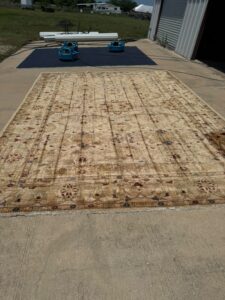
Before: Lines and faded color from cleaning against the grain.
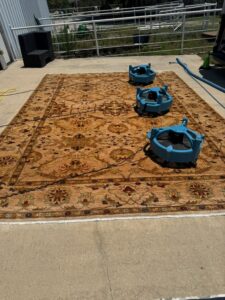
After: Rich color and no lines.
But honestly, not every rug can be fully restored. Severe fiber distortion, dyes that have permanently changed, and rugs whose structure has started to break down can’t always be reversed. Glued backing or trim that has separated isn’t always a simple repair either.
Before I start any work, I look at the rug, explain your options and tell you what result to realistically expect. My goal is the best possible restoration without causing more damage.
How I Clean a Wool Rug
Every wool rug I clean starts with a dye test. I dampen a clean white towel with hot water and hold it against the dyed fibers for five to ten minutes. If any color transfers onto the towel, the dyes may be unstable, so I change the plan. That can mean a dye-stabilizing treatment, a lower water temperature or a gentler cleaning solution.
From there, I choose the method based on how the rug is made and how dirty it is. Some rugs do best with truck-mounted hot water extraction, others with full immersion washing or a wool-safe shampoo that’s completely rinsed out. Every rug gets pH neutralization.
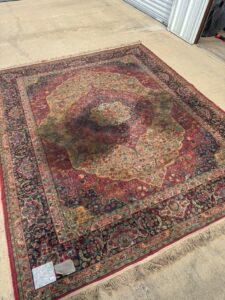
Before: Heavy urine contamination.
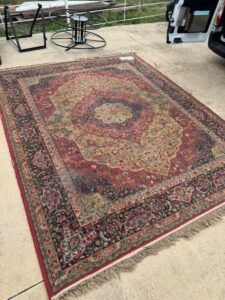
After: Fully cleaned.
Drying happens at our shop, with dehumidifiers and air movers when the weather isn’t right for drying. A rug isn’t finished until it’s dry all the way through, including the backing. You can see the full process on our wool and area rug cleaning page.
Get Your Wool Rug Checked Before It Gets Worse
If your rug has spots that won’t come out, colors that have run or a smell that won’t go away, call me before trying anything else. I’ll look at the rug, tell you what can be fixed and recommend the right cleaning method for it.
Call Pro Care Texas at 817-845-1595 for a free quote.
FAQs
Is hot water extraction safe for a wool rug?
Yes, when it’s matched to the rug and done with professional equipment. Truck-mounted extraction pulls the water back out, which rental machines can’t do. I test the dyes first and adjust the water temperature and cleaning solution for each rug.
How long does a wool rug take to dry after professional cleaning?
A typical 8×10 wool rug is often dry the same day in warm, sunny weather. Thicker rugs take longer, and I don’t return a rug until it’s fully dry, including the foundation and backing.
Can you clean my wool rug at my home?
Some rugs can be cleaned safely in your home. Many wool, oriental and handmade rugs clean best at our shop, where they can be fully washed, rinsed and dried in controlled conditions. I’ll tell you which one your rug needs.