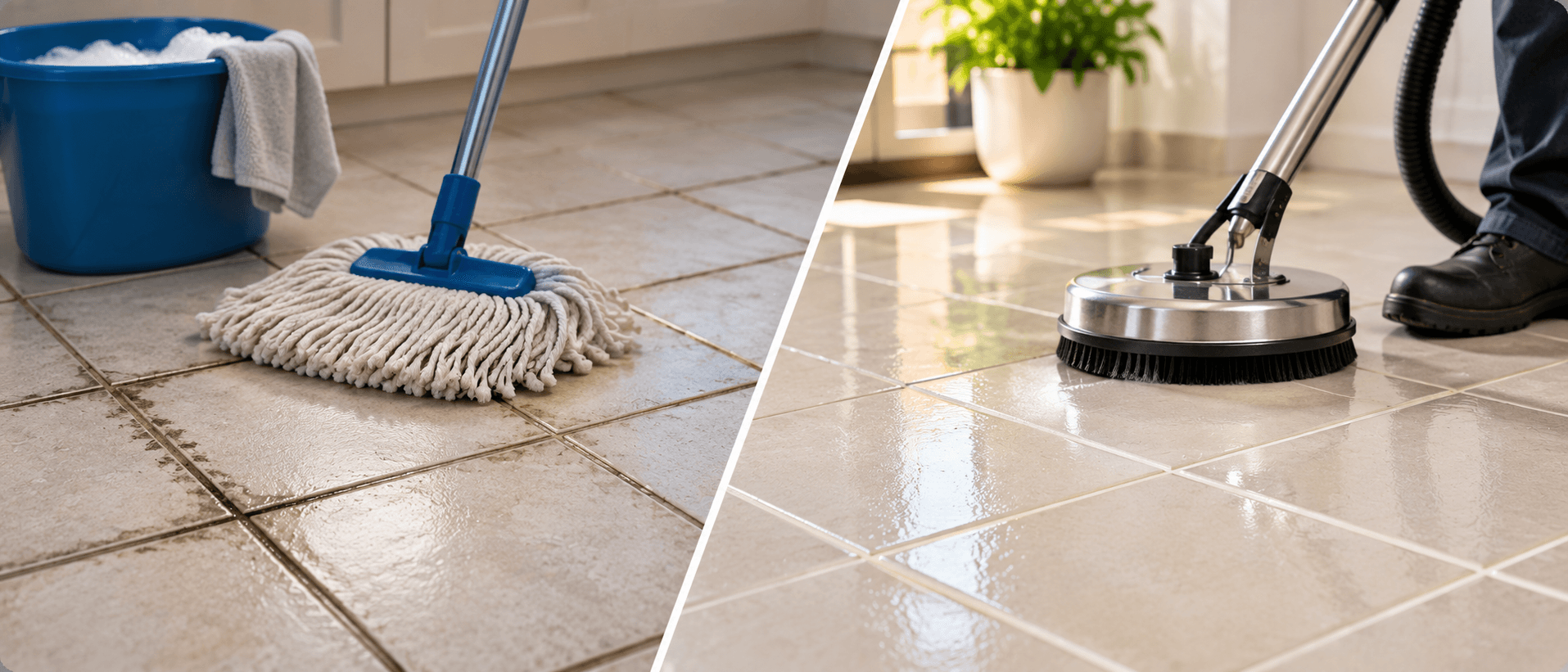
Professional Tile and Grout Cleaning vs DIY: Why Grout Looks Dirty Again a Week After You Mop
This post is for Fort Worth homeowners who have scrubbed their grout, watched it look great for a week and then seen the lines go dark again. It covers why that happens, what each DIY method really does, and when it is worth calling someone.
Key Takeaways
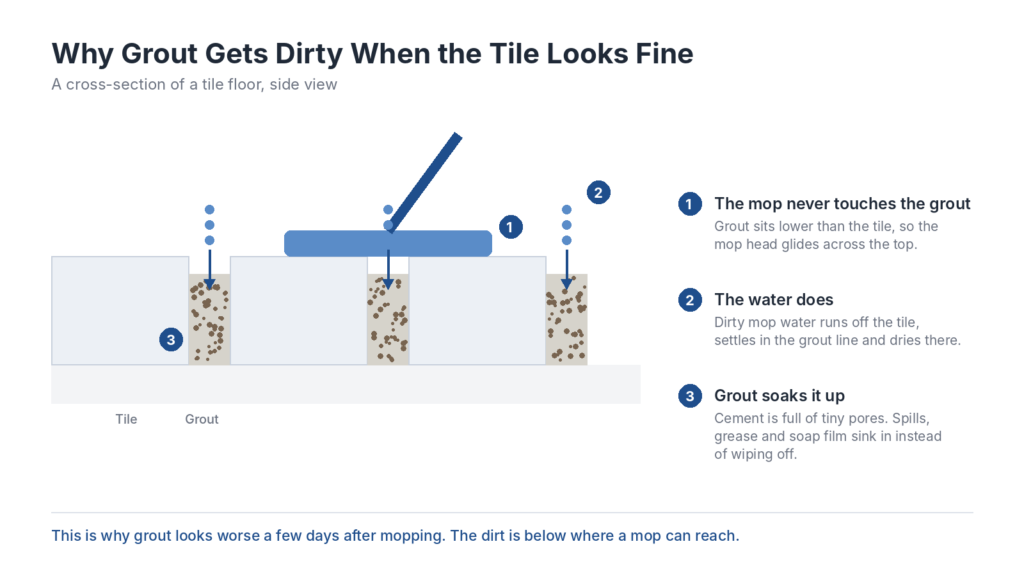
- Grouts get dirty because they are lower than the floor level and the mop doesn’t reach it. The dirty mop water or sticky detergents get stuck in the spaces.
- You can use DIY methods or get professional cleaning depending on your situation.
- If the area is small, grout is sealed and you just want a regular clean up, do it yourself.
- If you need cleaning for the whole floor and the grout has been dark for months, call a professional. Also, remember to get it resealed at the end.
Quick Answer
Do it yourself with vinegar and baking soda or hydrogen peroxide and baking soda if the area is small and you just want regular upkeep. Call a professional tile and grout cleaning service if your floor’s grout has been looking dirty for a long time and DIY is doing nothing for it.
Why Grout Gets Dirty so Fast When the Tile Looks Fine
After years of cleaning tile floors across Fort Worth and the north side suburbs, I can tell you dark grout doesn’t mean a dirty house. Grout is full of tiny pores that soak up whatever falls on the floor, so spilled coffee, cooking grease and dirty mop water sink in instead of wiping off.
That detergent residue that gets stuck in the lines is also one of the main reasons, as its sticky nature collects debris which makes the grout look dirty. Moreover, the level of the grout is lower than the floor, which is why the mop never really reaches it, so it stays dirty.
The water collects in the grout joints, and as it evaporates, the dirt stays behind. Over time this creates a cycle where the grout gets darker despite regular mopping.
But there are a few DIY ways you can try as well. We are going to cover those techniques next.
DIY Grout Cleaning: Common Techniques and What To Expect
If you’re exploring DIY techniques to clean your grout, whether it’s your bathroom or your living area tiles, these are some effective ways you can try cleaning it yourself.
Baking soda and vinegar
The first method is the cheapest and easiest method done with things that are available at home. However, since grout is made with cement and it is naturally alkaline you need to be very careful with your use of the vinegar or baking soda on it because frequent use can break down the cement over time.
How to use: you can make a paste of the baking soda by mixing the powder with water and then spraying vinegar over it, or sprinkle dry baking soda straight onto the grout lines, then spray vinegar over it and leave for 15 to 30 minutes. Then use a brush to scrub it off and rinse it.
Also note that vinegar is acidic and etches grout and natural stone; this is a common Fort Worth mistake on travertine and marble floors.
Baking Soda and Hydrogen Peroxide
This is the method most people end up recommending, and for good reason. Hydrogen peroxide is an oxygen based effective cleaner used for stubborn household stains. Mixed with baking soda, it becomes highly effective for grout cleaning.
How to use: Mix 3% hydrogen peroxide with baking soda. Let it bubble up for 5 to 15 minutes to break down the gunk, and oil. Then, gently scrub the lines, and rinse thoroughly with warm water.
Bleach
Bleach whitens the grout, but doesn’t remove dirt. On the downside, it weakens cement grout over time and can strip colored grout. Grout maker Mapei says regular bleach use discolors and weakens it. Do a patch test before using any chemical based product on your flooring.
Steam Mop
The heat loosens dirt but there’s no extraction, so soil and moisture stay in the grout, and it can strip the sealer.
Grout brush and store cleaner
Grout brush and store cleaner can work well for a small patch like in front of the sink. But, you will be on your knees for hours for a full floor.
What actually works between cleanings
A pH-neutral tile cleaner, a microfiber mop and the occasional gentle brushing will keep ceramic and porcelain tile with cement grout in decent shape. The catch is that this only removes surface dirt. Once oils and grime are embedded in the grout, household methods stop doing much. Whatever you use, don’t leave dirty mop water or cleaner residue behind. That is what starts the cycle again.
What a Professional Tile and Grout Cleaning Does Differently
We start by vacuuming when needed to remove loose debris. Next, we apply a professional cleaning solution and let it soak to break down the built-up dirt, grease and grime.
We then mechanically scrub the tile and grout, followed by hot water extraction with our truck-mounted equipment. This flushes the loosened dirt out of the grout joints and pulls the dirty water out at the same time, instead of spreading it around.
Finally, we dry the floor and offer optional grout sealing for added protection against future staining.
The one thing you can’t do at home is combine high-temperature water, controlled pressure and immediate high-powered extraction. You can scrub grout by hand, but you can’t flush embedded dirt out of the joints and pull the water out at the same time with a mop and a bucket.
Our tile and grout cleaning service page covers the tile types we work on.
Difference Between DIY and Professional Cleaning
| Feature | DIY (mop, brush, store cleaner) | Professional (Pro Care Texas) |
|---|---|---|
| How deep it cleans | Surface of the tile only. Grout sits lower than the tile, so the mop never reaches it | Pulls soil out from inside the grout pores, not just off the top |
| What happens to the dirty water | Settles into the grout lines and dries there | Rinsed and vacuumed out with hot water extraction |
| Residue left behind | Soap film that attracts new dirt within days | Neutralized and rinsed, nothing left to grab dirt |
| Risk to grout | Bleach weakens and discolors cement grout, vinegar etches it | Cleaners matched to grout type, no harsh chemicals |
| Risk to natural stone | High. Vinegar and acidic cleaners etch marble, travertine and limestone | Stone-safe products and pressure settings |
| Time for a kitchen floor | Hours on your knees with a brush | About 1 to 2 hours for a typical kitchen or bathroom |
| Effort from you | All of it | Move a few things off the floor |
| Sealing afterward | Usually skipped | Optional sealing where the grout cleans up well |
| How long it stays clean | Days to a couple of weeks | A couple of years for most homes, about a year with pets, kids or a busy kitchen |
| Best for | Small spots, quick upkeep between visits | Whole rooms, grout that has been dark for months, stone tile |
Common DIY Grout Cleaning Mistakes
If you’re using the DIY method here are a few common mistakes that I have seen and you should take care of.
Not testing a small area: grout and tile are both different materials and they can react differently to cleaners. Do a patch test before using the method on the entire floor.
Not rinsing properly at the end: Whatever baking soda or cleaner is left in the line it becomes residue. Then that sticky residue collects dirt again within a few days. Make sure to wash the grout thoroughly.
Using an acrylic floor finish to make the tile shine: this one gets expensive. The coating wears, scratches and discolors unevenly, traps dirt, and ends up patchy. Removing it takes hours of professional work, so a cheap fix turns into a restoration job.
Treating natural stone like ceramic: marble, travertine and limestone can’t be cleaned the same way as ceramic or porcelain. Acidic cleaners like vinegar etch the stone, and strong alkaline cleaners or hard scrubbing can damage the finish. We regularly see stone floors that need restoration rather than cleaning because of the wrong product.
Not getting grout sealed: grout sealing works like an insurance policy for your tiles. If you take one thing from this post, seal your grout after you clean it. More on why in the next section.
Why Sealing Matters After Cleaning
Grout that has been cleaned but not sealed will get dirty again within a few weeks. The pores in the cement are open, so the next spill soaks in the same way the last one did.
A grout sealer fills those pores so dirt stays on the surface of the grout instead of soaking into it. Once the grout is sealed, regular mopping is enough to keep it clean, and the floor stays looking clean for months instead of days. Sealing doesn’t make grout stain-proof, but it gives you time to wipe up a spill before it soaks in.
If the grout is permanently stained, a color sealer can restore it to one even shade without replacing it. We offer both clear and color sealing. One DIY mistake we see often is homeowners applying a color sealer over grout that was never properly cleaned. The coating doesn’t bond evenly to the dirty surface and ends up blotchy, often worse than the original grout.
Cleaning and sealing is for grout that is dirty. If the grout is cracked, missing or permanently damaged, it needs repair rather than cleaning, and we will let you know that before any work starts.
Kitchen Grout vs Bathroom Grout
Kitchen grout collects cooking oils, grease, food residue and tracked-in dirt. Bathrooms are a different problem: soap residue, body oils, mildew and, around the toilet, urine. Showers also build up hard water minerals and soap scum from constant moisture. These need different cleaning chemistry than ordinary dirt and grease, which is one reason a single all-purpose cleaner struggles in both rooms.
How Often Should Tile and Grout Be Professionally Cleaned?
For most households, professional tile and grout cleaning every couple of years is enough. Homes with heavy foot traffic, children, pets or a busy kitchen usually benefit from annual cleaning. Good maintenance between visits, a pH-neutral cleaner and a microfiber mop with clean water, stretches the time between them.
When Is DIY Fine and When Should You Call a Professional?
DIY is fine for a small area with light surface dirt. A professional is the right call for whole-room floors, grout that has been dark for months, or natural stone tile.
Try DIY if:
- The affected area is small, like a spot near the sink or a single bathroom wall
- The grout was sealed recently, so dirt hasn’t soaked in
- The dirt is light and only on the surface
- You’re doing weekly or monthly upkeep between deeper cleans
Call a pro when:
- You’re dealing with whole-room floors, where scrubbing by hand takes hours and rarely gives an even result
- The grout has been dark for months, because by then the dirt has settled deep into the pores
- You have natural stone tile like marble, travertine or limestone, since one wrong cleaner can etch it permanently
- You’re about to sell or list the house and want the floors looking their best
- A tenant has just moved out and the grout needs a full reset
If your grout falls into the second list, Pro Care Texas grout cleaning services will pull the dirt out from inside the grout instead of pushing it around, and seal it so it stays cleaner for longer. We serve Fort Worth and the north side suburbs. Call or text (817) 845-1595, or request a quote online.
FAQs
Can bleach damage grout?
Yes, bleach can wear the grout if used frequently, so be careful with it.
Is steam cleaning good for tile and grout?
It only helps soften the dirt but it does not pull it out. Professional hot water extraction uses heat and pressure together with vacuum recovery, which is what actually removes the dirt.
Can you clean grout without resealing it?
You can but the old sealer or natural protection also gets stripped away with cleaning so if you don’t want your grout to get dirty all over again in a short time, get it resealed.
Does professional grout cleaning really work?
Professional grout cleaning includes extracting embedded dirt in the grout pores with proper machinery which thoroughly cleans it and restores the color as well.
How long does professional tile and grout cleaning take?
A typical kitchen or bathroom floor takes about 1 to 2 hours, depending on size, how dirty it is and how much detail work is needed.
How long after cleaning before I can walk on the floor?
Because the equipment extracts most of the water, floors dry fairly quickly, and light foot traffic is fine once the surface is dry. If the grout is sealed, the sealer needs extra drying and curing time before normal use.
Does professional cleaning fix cracked grout?
No, that’s regrouting, a different job done to fix damaged grout. Cleaning just removes dirt, and restores color.