Loading content…
Want it done for you? Pro Care Texas offers hardwood floor cleaning for homes across Fort Worth, Keller, Haslet and nearby towns, with a free in-home quote.
Local Expertise, Proven Results — from Haslet to Keller and across the greater Fort Worth area
Text/Call Now:


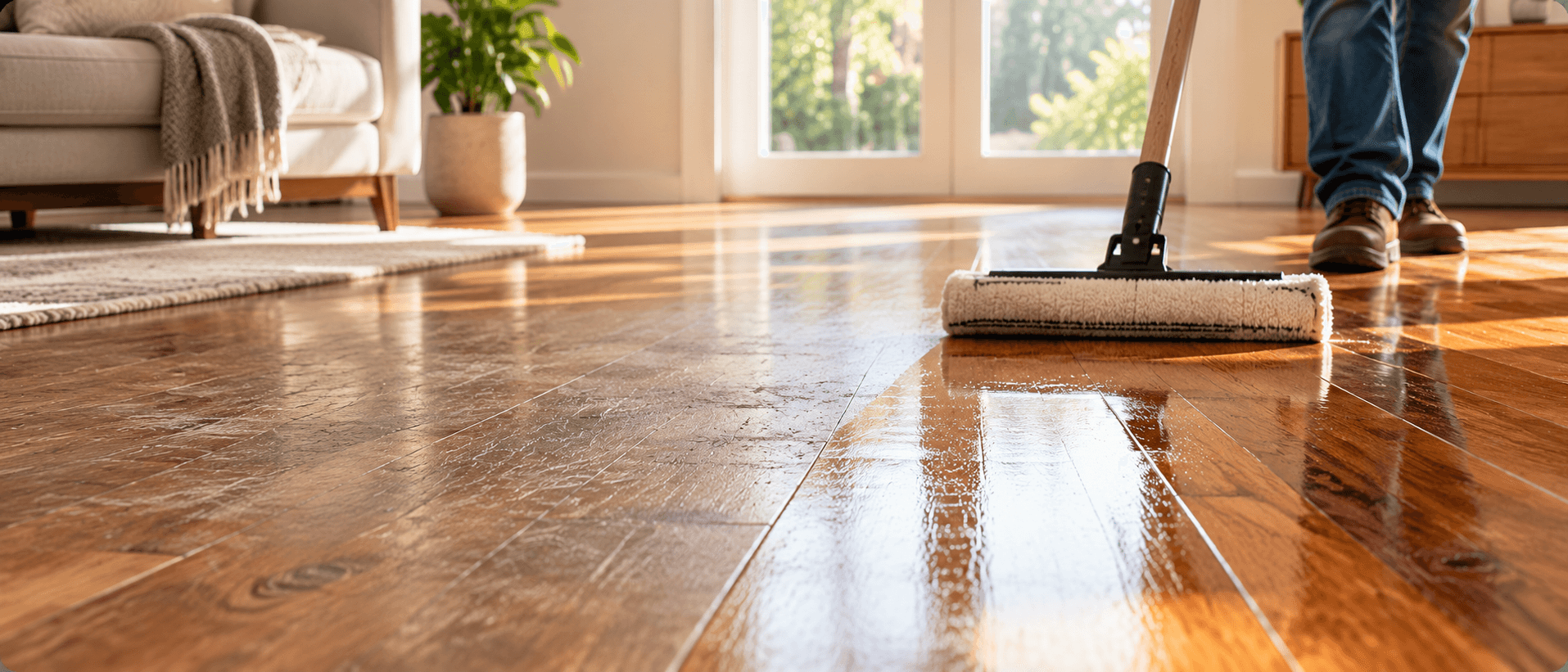
When people ask me about their hardwood floors, what they really want to know is what they should particularly do to their floors. Depending on the situation and type of wear, sometimes the answer is a professional cleaning, sometimes it’s a fresh protective coat, and sometimes the floor needs to be sanded down to bare wood. If you don’t research properly and end up picking the wrong option, you spend money on something that can’t give you the result you’re after, so the first thing I do is work out which situation you’re in. Here’s how I think about it.
The Short Answer
The rest of this post is the reasoning behind each of those.
When I look at a hardwood floor, I’m not only checking whether it’s dirty. I look at four things: the finish, the overall condition of the floor, where the wear is, and any visible damage. Each one tells me something different. The finish shows me what protection is left on the wood. The overall condition tells me how much the floor has been through. The wear pattern shows where it gets hit the hardest, and visible damage tells me whether the problem is on the floor or in it.
All of that points me toward one of three situations: something sitting on top of the floor, a finish that’s wearing out, or damage in the wood itself. A floor with built-up dirt and residue is a good candidate for professional cleaning. If the finish is worn but the urethane is still intact, the floor may be ready for a maintenance recoat. Once you get to deep scratches, exposed wood or serious damage, sanding and refinishing is generally what it takes.
I go through this with customers on purpose. These are three very different jobs, and it helps to know which one you’re dealing with before you spend a dollar.
Cleaning works on what’s sitting on the surface. If the damage goes deeper than that, cleaning alone can’t bring the floor back, no matter how well it’s done.
I explain the difference between dirt, a finish that’s breaking down and permanent damage to the wood. They can look alike when you’re staring at a dull floor, but they aren’t the same problem and they don’t have the same fix.
I want you to know that before you decide anything. It means you can make your call without paying for a service that won’t deliver what you’re hoping for, and if the floor needs something else, you can go straight to that.
This is a big one in DFW. Customers describe it to me almost the same way every time. The floor looks cloudy. It feels sticky. There are streaks. It looks dull, and it never seems clean, no matter how often they mop or what they use.
What they’re usually looking at isn’t dirt. It’s buildup on top of the finish, and mopping more doesn’t take it off.
I don’t just start with stripping. I check the finish that’s on the floor and what’s built up on top of it, and then I pick a way to remove it that won’t hurt the wood underneath. That order matters, because the goal isn’t only a clean-looking floor. It’s getting there without damaging the flooring.
A lot of the trouble I see comes from how floors get cleaned, and it usually comes from people trying hard to do the right thing. Here’s what I run into most in DFW homes:
Between them, these can wear down the finish, leave residue behind, discolor the floor, or let moisture damage set in. None of it happens overnight, which is part of why people don’t connect it to their routine.
What I recommend is simple, and both parts matter. Use a cleaner made for hardwood, and keep the floor as dry as you can. The right product and as little moisture as possible are what keep a hardwood floor in good shape.
A maintenance recoat is a fresh protective layer put over an existing urethane finish. It only works when the finish underneath is compatible and still in good enough shape to take it. When it fits, the floor looks better and stays usable longer.
How long a recoat holds up depends on how much traffic the floor gets, how you take care of it day to day, and what shape the old finish is in. Two floors with the same coat can wear very differently because of those three things.
A recoat isn’t the answer for every floor, though. If yours needs complete sanding, staining or refinishing, I’ll send you to a qualified hardwood flooring specialist for that. I’d rather point you to the right person than put a coat over a floor that needs more.
North Texas goes through big seasonal swings in humidity, and hardwood reacts to them. When there’s extra moisture, boards can swell or cup. When the air is dry, they shrink and gaps show up between the boards.
Moisture can also come up through a concrete slab foundation, and that can add to the problem.
Here’s why it matters for cleaning. If moisture is what’s behind the swelling, cupping or gaps, cleaning the surface won’t fix it. The moisture has to be dealt with first, and the cleaning comes after that.
Urine gets into hardwood through scratches, worn finish, seams and the gaps between boards. Once it gets past the finish, it’s in the wood and not just on top of it.
Professional cleaning can help with surface contamination, and sometimes with odor. Deep discoloration inside the wood is another story. That can be permanent. In bad cases, the answer is replacing boards or refinishing the floor.
If the smell after your pet’s accident is what’s bothering you, there’s more on our pet odor removal page.
I mostly work on hardwood floors with a compatible protective finish, so that’s where I can do the most good. Some floors need something else first:
These may need specialized treatment or repair before professional cleaning makes sense. I’d say that up front before I’d clean a floor that needs other work first, because cleaning it wouldn’t be doing you any favors. If you’re not sure which group your floor falls into, that’s a good thing to ask whoever evaluates it.
Look at the finish. Worn but still intact? A recoat might do it. Deep scratches, bare wood or serious damage? That’s a refinish.
Probably buildup from wax, acrylic or floor polish, not dirt. Mopping more won’t get it off.
I’d skip it. It can wear down the finish and discolor the floor. Use a proper hardwood cleaner and not much water.
Surface contamination and some odor can improve with a professional cleaning. Deep discoloration inside the wood can be permanent. Severe cases may need boards replaced or a refinish.
Start by figuring out what you’re looking at: dirt, a worn finish, or damage in the wood. Once you know that, the right fix is usually pretty clear.
Not sure which one you’ve got? Check out our hardwood floor cleaning service or get in touch. I’ll look at the finish, the wear and the damage and tell you honestly what will help and what won’t.