How Often Should Natural Stone Be Sealed?
I’ve worked with natural stone in Texas for 20 years, and I’ve done hundreds of sealing jobs. The question people ask me most isn’t actually how often to seal. It’s “how soon can I get back on my floor?” We’ll get to that. But the how-often question comes right behind it, and the honest answer is that it depends on your stone and how you live with it.
Here’s what I’ve learned from the floors and countertops I’ve worked on.
The Biggest Myth About Sealing
People think sealer prevents stains. It doesn’t. What it does is buy you time. It slows down how fast liquid soaks into the stone, so you have a chance to wipe the spill up before it sinks in. You still have to wipe it up.
Customers also expect sealer to make stone waterproof, and that’s the other thing I have to gently correct, it won’t.
How to Tell If Your Stone Needs Sealing
You don’t need a specific timeline to follow. Look at your own floor or countertop, because every piece of stone is a little different.
- Drip some water onto the stone.
- Wait anywhere from 5 to 30 minutes, depending on the stone.
- Watch what happens. Does the water bead up? Or does it soak in and make the stone look darker under the wet spot?
If it beads, you’re good. If it soaks in or the stone deepens in color, it’s time. That test works the same whether your stone is polished, honed, light, or dark.
Other signs I look for are stains showing up more often and random discoloration appearing on the surface.
Where Sealer Fails First
Sealer rarely wears out evenly. In my experience it goes first in high-traffic lanes, like the path everyone walks through a room, and in areas that get full sun.
It also fails early when the wrong cleaning products are used. That’s probably the most common reason I see.
Does Texas Weather Change Anything?
Not as much as people expect. Stone is stone. It comes from the outdoors and ends up in your climate-controlled house, so heat and humidity usually aren’t the problem.
Hard water is the bigger culprit in what I’ve seen, mostly in showers. If you have a stone shower, keep a closer eye on it.
What I Do Before Sealing
I always clean the stone first, and I let it dry completely. If you seal stone that’s still wet, moisture gets trapped, and the sealer can’t adhere or cure properly.
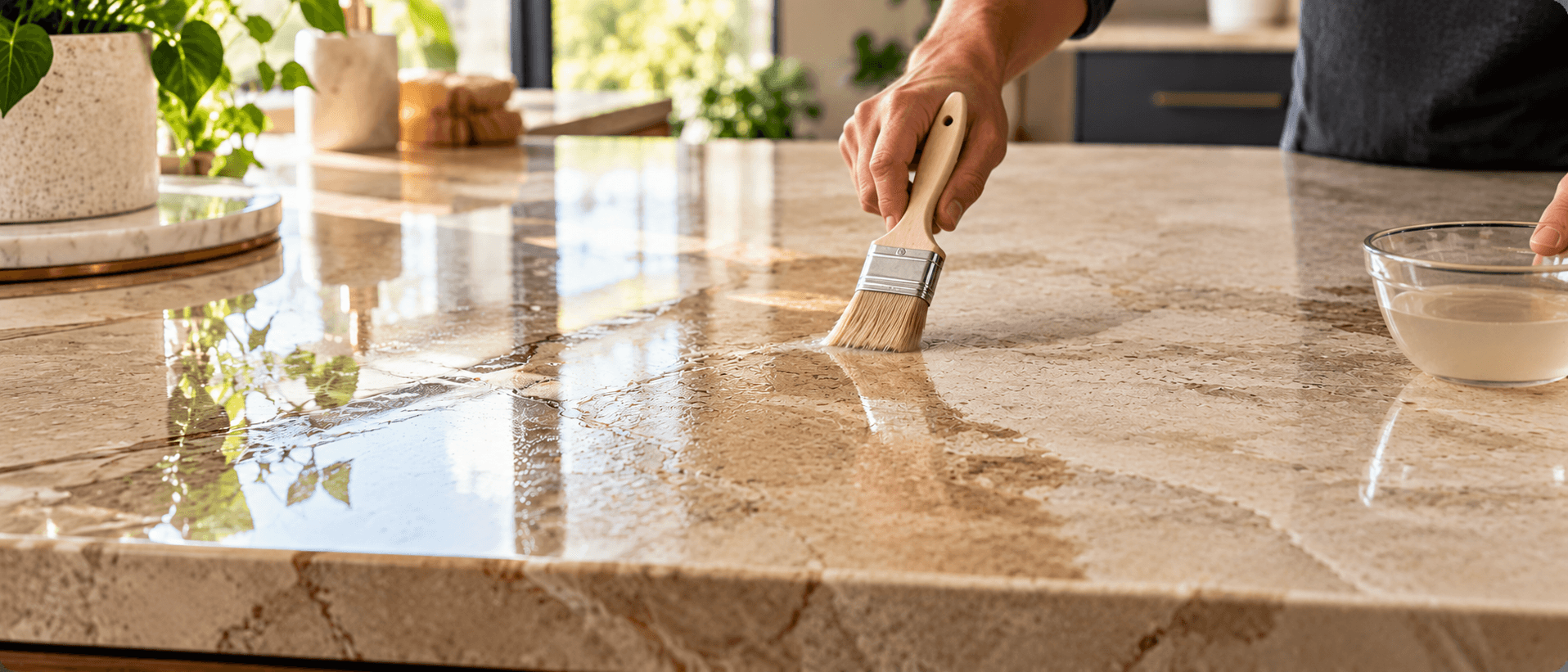
I use a solvent-based nano sealer, which is a penetrating sealer. It’s newer technology and I think it’s better than the older products. I never put a coating on the surface of the stone. The sealer should soak in, not sit on top.
If your stone needs polishing, that has to happen before sealing. Sealer doesn’t change how stone looks, so it won’t hide scratches or dullness.
How Soon Can You Walk on It?
This is the question I get most.
- Same day: walk on it in socks if you need to.
- Next day: back to normal use.
- After 24 hours: put furniture back.
- 72 hours: fully cured.
Mistakes I’ve Seen
Using wax to make stone shiny. I’ve had customers use acrylic wax on their stone, and I had to strip all of it off. That was not fun. The wrong sealer or a wax can cost thousands to remove, so don’t do it.
Sealer that dries too fast. Sometimes it dries before it soaks in and leaves residue on the surface. I fix it by buffing the area with a tiny amount of fresh sealer to wet it again.
Going cheap. Sealing usually starts around $1.25 a square foot, and I’ve seen people do it for less. Cheaper usually means someone is saving money somewhere in the application. I’d rather hire the person who will make sure my stone is actually sealed.
Staining vs. Etching
These get mixed up all the time. Staining is when something soaks into the stone and changes its color. Etching is damage to the surface itself, either physical or chemical, that leaves it dull.
Sealer helps with staining. It won’t fix etching. For etching and scratches I hone the stone and then polish it to match the shine around it, or to whatever level of shine the customer wants.
What You Can Do Yourself
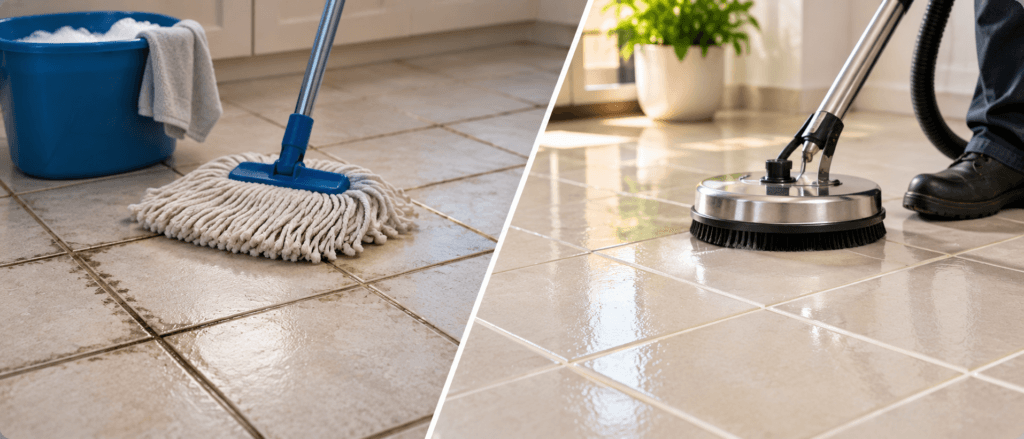
Mopping weekly is about it. If your stone doesn’t come clean with mopping, that’s when to call a professional.
I don’t recommend specific brands. What I will say is to use a neutral pH cleaner labeled for your specific type of natural stone.
If you want to help your sealer last, these three habits matter most:
- Sweep daily.
- Mop as needed with the proper product.
- Put sliders or protective pads under all your furniture.
How Long Does a Job Take?
There’s no typical job, because every home is a different size. Most cleaning and sealing jobs I do are finished the same day, and clients can go back to normal activities the next day.
If you’re looking for natural stone cleaning services in Texas, I always clean first and seal second, because sealing over a dirty stone locks the dirt in. You can learn more about our stone sealing process, or request a free quote and I’ll take a look at your stone in person.
Final Thoughts
There’s no single number for how often to seal natural stone. Do the water test a couple of times a year, clean with the right products, and protect your floors from grit and furniture. Do that and you’ll know when it’s time.
Frequently Asked Questions
How soon can I walk on my floor after it’s sealed?
You can walk on it in socks the same day. Normal use resumes the next day, and furniture can go back after 24 hours.
Does sealer stop stains?
No. It buys you time to wipe up a spill before it soaks in.
What’s the best sealer?
I use a solvent-based nano penetrating sealer. It soaks in instead of coating the surface.
Can I put wax on my stone to make it shiny?
Please don’t. Acrylic wax is expensive to strip off, and the right fix for dullness is polishing, which has to be done before sealing.
How do I know if my sealer is working?
Do the water test. If water beads up, it’s working.
What does professional sealing cost?
It typically starts around $1.25 a square foot, but every job is different.