


Types of Countertops: A Complete Natural Stone Guide
- Every natural stone countertop has different care needs. Marble, granite, quartzite, travertine, limestone, and soapstone vary in durability, porosity, and maintenance requirements.
- Proper daily care helps prevent costly damage. Wipe spills quickly, use pH-neutral stone cleaners, avoid acidic products, and protect surfaces with cutting boards and trivets.
- Professional maintenance keeps stone looking its best. Cleaning, sealing, polishing, honing, and hole filling can restore natural stone when everyday care is no longer enough.
If you’ve started researching types of countertops for a kitchen or bath project, you’ve probably noticed how fast the options multiply. Marble, granite, quartzite, travertine, limestone, and soapstone: every natural stone countertop has its own personality, and its own care requirements. This guide breaks down the most popular countertop types materials, compares them side by side, and explains what it actually takes to keep any of them looking showroom-fresh for years, not just months.
Whether you already have stone countertops installed or you’re comparing stone slabs before a remodel, understanding the material is the first step. Knowing how to care for it is the second, and it’s the one most homeowners skip.
Natural Stone vs. Engineered Options
Before comparing individual stones, it helps to separate natural stone countertops from engineered alternatives like quartz. Natural stone is quarried and cut, which means every slab has a unique veining and character. Engineered stone is manufactured for uniformity. Both have a place in a kitchen, but if you’re drawn to the depth and one-of-a-kind pattern of a stone slab, you’re looking at a natural material, and natural materials are porous to varying degrees, which is the key fact that drives everything about their care.
Types of Stone Countertops, Compared
Here’s how the most requested types of stone countertops stack up in terms of durability, porosity, and how often they need attention.
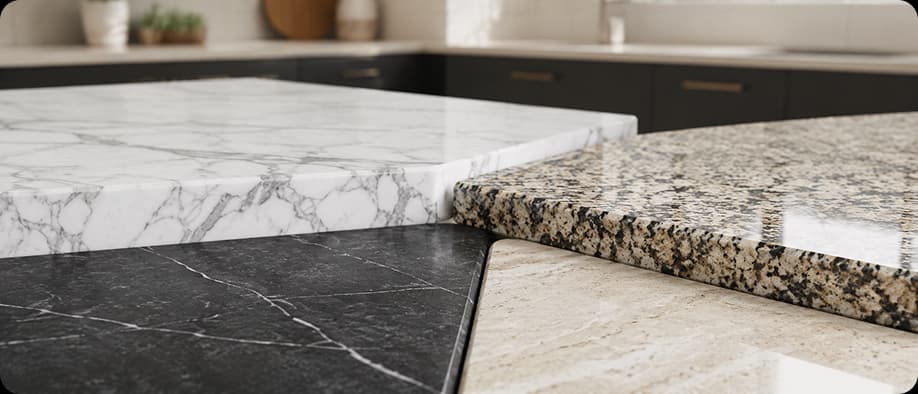
Marble countertops: Prized for their classic white-and-grey veining, white marble countertops and black marble countertops alike are calcium-based, which makes them beautiful but genuinely delicate. Marble etches when it contacts anything acidic, including wine, citrus, and even some cleaning products, so it’s best suited to bakers, low-acid kitchens, or homeowners who don’t mind a patina developing over time.
Granite: One of the most durable options for a stone counter top, granite resists heat and scratching far better than marble. It’s still porous enough to need periodic sealing, but for busy households it’s a dependable middle-ground choice.
Quartzite: Often confused with engineered quartz, natural quartzite is one of the hardest countertop slabs you can buy, standing up well to heavy prep work and daily wear.
Travertine: A stone surface with natural pits and holes, travertine brings warmth and texture but needs those holes filled and sealed regularly to prevent staining.
Limestone: Soft and elegant, limestone is best kept to lower-traffic surfaces where its gentle color and softness aren’t put under daily stress.
Soapstone: Naturally non-porous and low-maintenance, soapstone is oiled rather than sealed and develops a rich patina with age.
For a full side-by-side view, see the comparison graphic below.
Grey, White, and Beyond: Choosing a Look That Lasts
Color trends shift, but the fundamentals don’t. Grey marble countertops pair well with both warm and cool kitchen palettes, while white marble countertops remain the most requested look for a reason: they brighten a space and photograph beautifully. If you love the marble aesthetic but worry about upkeep, ask your fabricator about granite that looks like marble; several granite and quartzite slabs mimic marble’s veining with meaningfully better stain and scratch resistance.
Whatever stone top you choose, remember that color and finish (polished vs. honed) affect how visible etching, water spots, and wear will be over time. A honed finish, for example, tends to hide light etching better than a high-gloss polish.
Why “Natural” Doesn’t Mean “Low-Maintenance”
This is the part that surprises a lot of new stone owners: natural stones are porous. That means liquids, oils, and acids can penetrate the surface if it isn’t properly sealed and maintained, leading to staining, dulling, and etching that a simple wipe-down won’t fix. The Natural Stone Institute’s care guidelines note that identifying whether your stone is calcareous (acid-sensitive, like marble, travertine, and limestone) or siliceous (like granite and quartzite) is the first step to choosing the right cleaning products.
A few care principles apply across almost every stone type:
- Blot spills immediately rather than wiping them, which can spread the liquid.
- Skip vinegar, lemon, and other acidic cleaners on calcareous stones, since they’re a leading cause of etching. The Natural Stone Institute’s marble care guide covers this in detail.
- Use coasters, trivets, and cutting boards, even on harder stones like granite. The granite care guide recommends this alongside routine resealing.
- Reseal on a schedule appropriate to your stone type: annually for more porous stones, less often for denser ones.
When DIY Care Isn’t Enough
Daily wiping and the occasional resealing kit will get you far, but most natural stone countertops eventually need professional attention, especially once etching, dullness, or staining sets in. That’s where the type of service matters:
- Natural stone cleaning lifts embedded soil and buildup that household cleaners can’t reach, and is the right starting point for most stone maintenance visits.
- Natural stone sealing restores the protective barrier that keeps spills from soaking into porous stone, especially important for marble, travertine, and limestone.
- Natural stone polishing brings back shine and smooths light surface wear using progressive diamond pads.
- Natural stone honing removes deeper scratches and etch marks that polishing alone won’t fix.
- Natural stone hole filling is specific to travertine and other stones with natural voids, restoring a smooth, even surface.
If you’re in the Fort Worth / DFW area and your stone counter tops or floors have lost their shine, developed etch marks, or just haven’t been professionally cleaned in a while, Pro Care Texas’s natural stone cleaning service is a good place to start. You can see examples of past results in our work or request a free in-home quote.
The Bottom Line
There’s no single “best” stone. The right choice depends on how you use your kitchen, how much upkeep you’re willing to do, and the look you’re after. Natural stone countertops reward homeowners who understand their material: clean up spills promptly, avoid acidic cleaners, reseal on schedule, and bring in a professional when etching or dullness builds up. Do that, and a marble, granite, or travertine surface can stay a centerpiece of your home for decades.
Frequently Asked Questions
What is a natural stone countertop?
A natural stone countertop is cut from quarried stone, like marble, granite, quartzite, travertine, limestone, or soapstone, rather than manufactured. Because it’s a natural material, no two slabs look exactly alike, and each stone has its own porosity and durability profile.
Is quartz a natural stone countertop?
No. Quartz countertops are engineered, made from crushed quartz mixed with resin and pigments for a uniform look. Quartzite, on the other hand, is a natural stone. The names sound similar, but they behave very differently: quartzite needs sealing like other natural stones, while quartz generally doesn’t.
What’s the best natural stone countertop cleaner?
Stick with a pH-neutral cleaner made specifically for stone. Avoid vinegar, lemon, or other acidic products, especially on marble, travertine, and limestone, since they can etch the surface. If a countertop already looks dull or stained, a professional cleaning removes buildup that daily wiping can’t.
How often does a natural stone countertop need to be sealed?
It depends on the stone. More porous stones like marble, travertine, and limestone typically need resealing every 12-18 months, while denser stones like granite and quartzite can often go longer. High-use kitchens and busy households may need it sooner.
What’s the difference between natural stone and quartz countertops?
Natural stone (marble, granite, quartzite, travertine, limestone, soapstone) is porous, needs periodic sealing, and shows unique veining since it’s cut straight from the earth. Quartz is engineered for a consistent pattern and generally resists stains and etching without sealing, though it’s less heat-tolerant than some natural stones and can’t be repaired the same way.