Loading content…
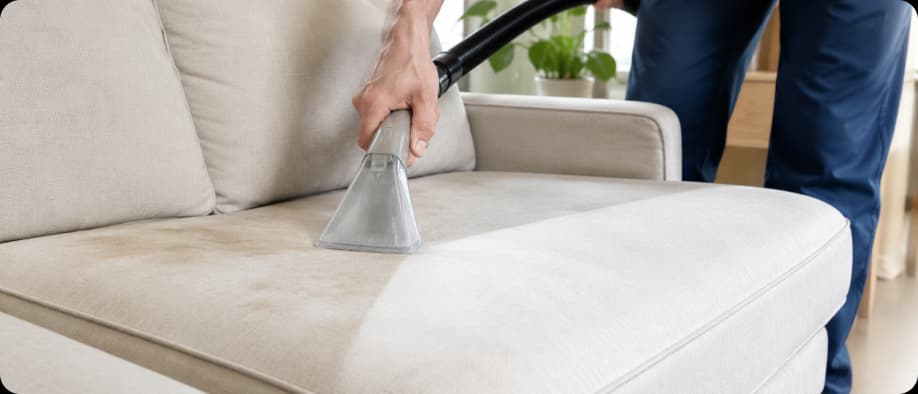
Want it done for you? Pro Care Texas offers professional sofa and upholstery cleaning for homes across Fort Worth, Keller, Haslet and nearby towns, with a free in-home quote.
Local Expertise, Proven Results — from Haslet to Keller and across the greater Fort Worth area
Text/Call Now:


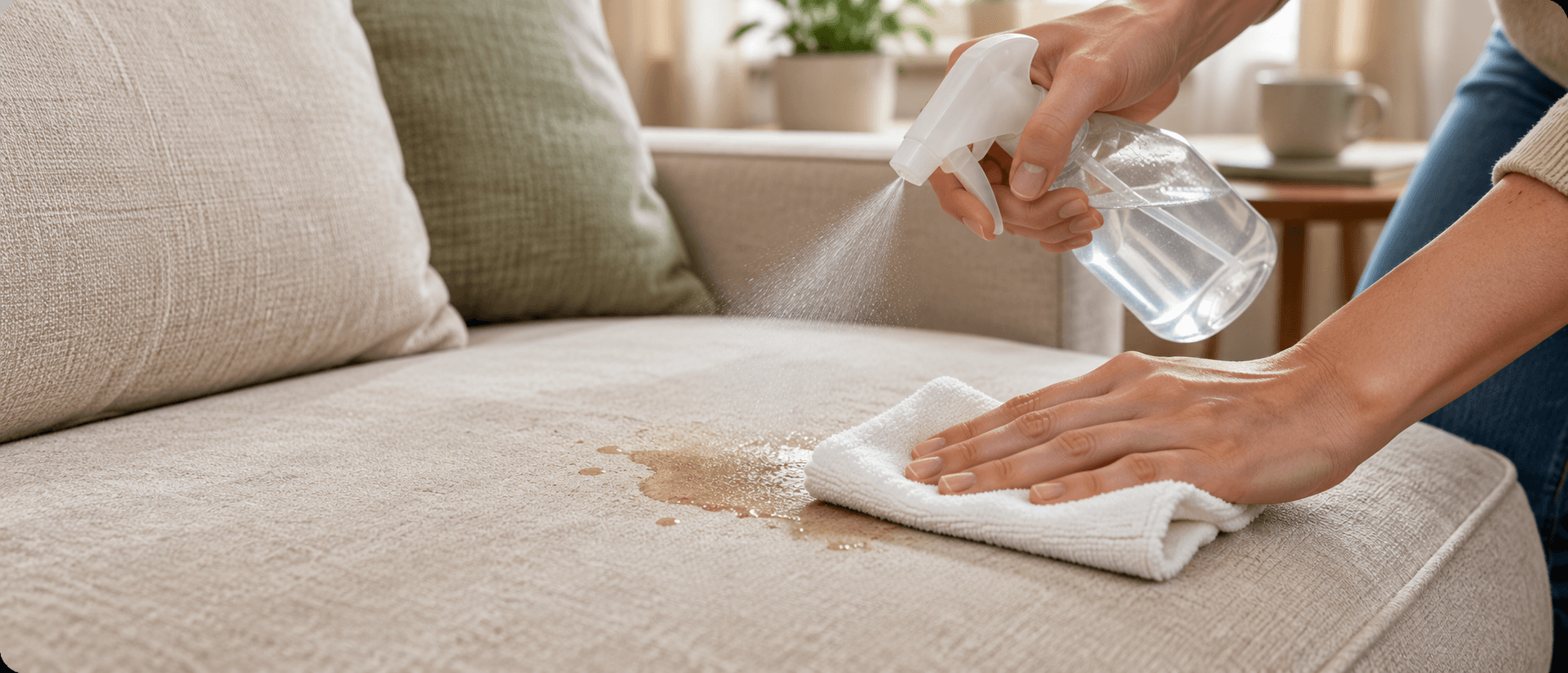
You just spilled something on your sofa. Before you reach for whatever’s under the sink, know this: the first five minutes matter more than any product you use afterward. Most “ruined” sofas we see weren’t ruined by the spill. They were ruined by what someone did to it right after.
Here’s how to handle it the right way, stain by stain.
Move fast, but don’t panic. A fresh spill is almost always easier to manage than one that’s had time to set.
That little tag with a single letter on it isn’t decoration. It’s the manufacturer telling you exactly what your fabric can survive.
One important note: this code is a starting point, not a green light to try every DIY method you’ve read about. Manufacturer instructions always take priority over general advice, including this article.
Every stain has a cause, an immediate response, a few things to avoid, and a point where it’s smarter to call in help. Here’s how that breaks down for the stains we see most often.
Blot immediately with a dry cloth, working from the outside of the stain inward so you’re not spreading it wider. Check your fabric code before applying anything else, and skip the temptation to scrub. Tannins in coffee and tea bond to fabric fast, and aggressive rubbing sets them deeper. A stain that’s had a day or two to dry is noticeably harder to lift than one you catch right away, which is really the whole theme of this article.
Get any solid food off the fabric first, then blot whatever liquid is left behind. Sauces and dressings often carry oil, so pay attention to whether you’re dealing with a straight food stain or a grease stain underneath it. That changes what comes next.
Grease doesn’t respond to water the way most household stains do, since oil and water don’t mix. This is the category where people reach for a random pantry hack, and we’d rather you didn’t. Not every “safe” household product is actually safe for every upholstery fabric. If you’re not sure your cleaning code allows it, blot what you can and leave the rest alone until you know more.
Speed matters most here. Blot straight down and resist any urge to dab in a circular motion. That spreads the pigment further into the fibers and widens the stain instead of shrinking it. The goal in the first few minutes is containment, not removal.
Ink is unpredictable. Ballpoint, gel, and marker inks all behave differently, and how they react also depends on your fabric. This is one spot where we’d say: don’t start experimenting with solvents unless your upholstery’s care instructions specifically allow it. Guessing wrong here can set the stain permanently or bleach the fabric around it.
This one deserves extra attention because it’s rarely just a surface issue.
What you can see on the cushion is often the smaller problem. Pet urine soaks through fabric into the cushion foam and sometimes the frame underneath, where surface cleaning can’t reach it. That’s why a spot that looks clean can still smell like it wasn’t touched.
We won’t tell you a quick home treatment will fully remove deep-set pet odor, because for a lot of cases, it won’t. If you’ve cleaned the visible spot and the smell keeps coming back, that’s usually a sign the problem has moved past what surface treatment can fix. At that point, professional pet odor treatment is worth looking into before the odor works its way further into the furniture.
It’s instinct to scrub at a stain. It feels like progress. It’s usually the opposite.
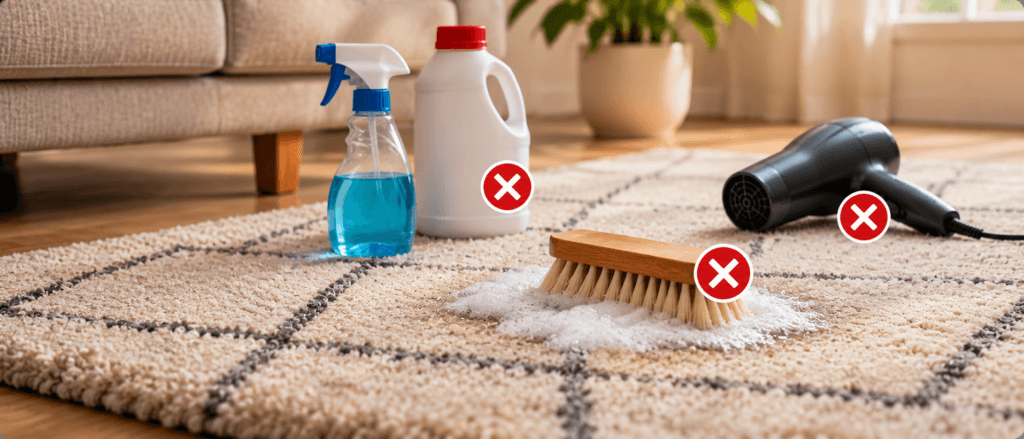
Rubbing pushes whatever caused the stain deeper into the fibers instead of lifting it out. It spreads the stain sideways, so a small spot becomes a bigger, blurrier one. It also stresses the individual fibers, which can fray or flatten them, changing how that section of fabric looks even after the stain itself is gone. On some materials, especially anything with a nap like velvet or microfiber, aggressive rubbing leaves a visible worn patch that has nothing to do with the original spill.
Blotting works with the fabric. Scrubbing works against it.
A few habits show up again and again in sofas that come to us with damage beyond the original stain:
Most of these come from good intentions. They just don’t account for how upholstery fabric actually behaves.
Not everyone finds this article five minutes after a spill. Maybe it’s a stain that’s been there for months, or one you inherited with a secondhand piece.
Set-in stains take a different approach. Don’t keep layering new products on top of old ones. That usually just adds a new problem on top of the original. Don’t scrub harder because gentle blotting “isn’t working.” Instead, try to identify what caused the stain and what fabric you’re working with, since that determines what actually has a chance of helping.
Worth knowing honestly: some set-in stains have already changed the fabric itself, whether through fading, fiber damage, or a chemical reaction with whatever caused the stain. Complete removal isn’t always possible, even with professional treatment. A professional assessment can at least tell you what’s realistic before you spend more time on it.
There’s a point where continuing to experiment costs you more than it saves. Consider calling a professional if:
None of these mean you did anything wrong. They just mean the problem has moved past what a cloth and a bit of patience can solve.
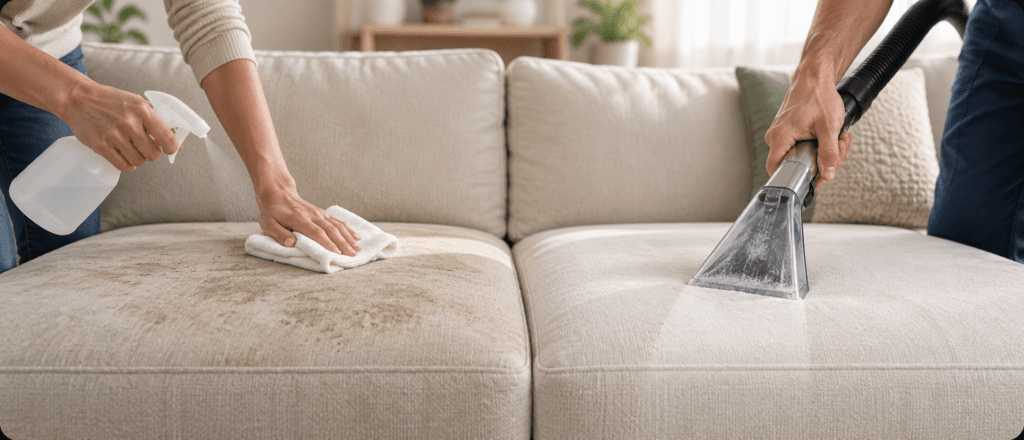
When we take on a stain that’s beyond home treatment, the process isn’t a mystery. It’s just more thorough than what’s practical to do yourself.
We start by inspecting the piece and identifying the fabric, since that determines everything else. From there we identify the stain itself where possible, because coffee, grease, and pet urine all call for different treatment. We select a method suited to both the fabric and the stain, clean it, then control and extract the moisture so the cushion isn’t left oversaturated. Drying is done carefully, with attention to how the piece is ventilated, and we inspect the results before calling the job finished.
It’s a longer process than a quick spray and blot, but that’s the point. It’s built to treat the stain without creating new problems along the way.
A fresh spill on your sofa isn’t a lost cause. It’s a timing problem. Act fast, blot instead of scrub, and respect what the cleaning code tells you, and you’ll handle the vast majority of spills without any lasting mark. The stains that turn into real damage are almost always the ones that got scrubbed, soaked, or layered with three different products before anyone stopped to think it through.
If a stain has already set, or you’re dealing with pet odor that keeps coming back no matter what you try, that’s not a sign you failed. It’s just a sign the job has outgrown a cloth and a bottle of spot cleaner.