
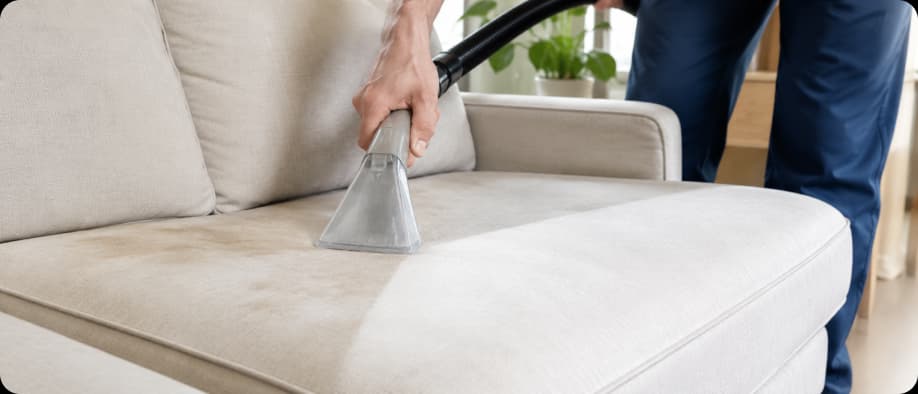
How to Clean Upholstery and Remove Stains From Your Sofa and Furniture
- Check the cleaning code first (W, S, WS, or X on the furniture tag). Using water on an “S” fabric can leave permanent rings and watermarks.
- Blot, never rub, and treat spills fast. Most fresh, minor stains come out with the right method for the fabric.
- Set-in stains, odors, and delicate or vacuum-only fabrics are best left to a pro. Pro Care Texas offers a free in-home upholstery quote across Fort Worth and DFW.
Your sofa takes more abuse than almost anything in your home: body oils, food, pets, and sunlight all wear it down. Over time it looks dull, smells musty, and holds onto stains. The good news is that many fresh, minor stains come out at home if you use the right method for the fabric. Deeper stains, odors, and delicate fabrics are where a professional makes the difference.
This guide covers how to read your fabric’s cleaning code, how to spot-treat the most common upholstery stains safely, and when it pays to bring in a pro. It comes from more than 20 years of cleaning sofas, sectionals, and chairs in homes across Fort Worth, Keller, Haslet, and the wider DFW area.
Start here: know your fabric’s cleaning code
Every piece of upholstered furniture has a tag, usually under a seat cushion, with a one-letter cleaning code. That letter decides what is safe to use, and using the wrong cleaner is the fastest way to leave a permanent watermark or damage the fabric.
| Code | What it means | Safe to use | Watch out for |
|---|---|---|---|
| W | Water-based cleaner is safe | Mild water-based upholstery cleaner or a damp cloth | Over-wetting; blot, do not soak |
| S | Solvent (dry) clean only | Water-free solvent cleaner | Plain water leaves rings; keep water off it |
| WS | Water or solvent both fine | Either method | Still blot, do not saturate |
| X | Vacuum only | Vacuuming and light brushing | No liquid at all; call a pro for stains |
If there is no tag, or the code is X or S, treat the piece as delicate and call a professional rather than experimenting on it.
How to spot-clean common upholstery stains yourself
For fresh, minor stains on a W or WS fabric, you can often take care of it at home. Two rules first: blot, never rub (rubbing pushes the stain deeper and frays the fibers), and always test any cleaner on a hidden spot first. Here is the general method:
- Blot up as much of the spill as you can with a clean, dry white cloth.
- Mix a few drops of mild dish soap into a cup of warm water (W or WS fabric only).
- Dampen a clean cloth, wring it out well, and blot the stain from the outside in.
- Rinse by blotting with a cloth dampened in plain water.
- Press a dry towel on top to pull out moisture, then let it air dry.
Food and drink (coffee, wine, juice)
Blot first, then use the mild soap-and-water method above on W or WS fabric. For red wine, blot with a little club soda before the soap step. Skip hot water, which can set the stain instead of lifting it.
Grease and oil
Sprinkle baking soda or cornstarch on the spot to absorb the oil, wait about 15 minutes, then vacuum it up. On an S fabric, follow with a solvent (dry) cleaner rather than water.
Pet stains and odor
Blot fresh pet urine right away, then treat with an enzyme cleaner made for pet messes, which breaks down the odor at the source instead of masking it. Old or deep pet odor has usually soaked into the cushion and padding and needs professional extraction to fully remove.
Ink
Dab (do not rub) with a little isopropyl alcohol on a cotton swab, working from the outside in. Test first, and stop right away if the fabric dye starts to lift.
Why professional upholstery cleaning is worth it
Rented machines and grocery-store sprays tend to leave residue that makes fabric attract dirt faster, and over-wetting a cushion can cause watermarks, shrinkage, and that musty smell that never fully leaves once it dries too slowly. Professional upholstery cleaning matches the method to the fabric, lifts embedded dirt, body oils, and allergens rather than just freshening the surface, and uses controlled drying so your furniture comes back fresh, not damp. For a sofa you paid hundreds or thousands of dollars for, that difference matters.
When it is time to call a professional
- Set-in or old stains that home cleaning did not lift
- Lingering odors, especially pet or smoke
- Delicate or dry-clean-only fabrics (S or X codes), silk, or antique furniture
- Large sectionals and pieces that are hard to clean evenly by hand
- Anything you cannot test safely, or where you are not sure of the fabric
- Before guests, a move, or listing a home
How professional upholstery cleaning works
A proper cleaning follows a few steps, and each one matters:
- Inspect. We identify the fabric and cleaning code and check for delicate areas, existing stains, and colorfastness.
- Vacuum. Loose soil, crumbs, and pet hair are removed before any cleaning starts.
- Pre-treat. Stains and high-use areas like arms, headrests, and seat cushions get a targeted, fabric-safe treatment.
- Deep clean. A method matched to the fabric lifts embedded dirt, oils, and odor.
- Groom and dry. The fibers are groomed and the piece is dried under control so it comes back soft and fully dry.
Most sofas are cleaned in the same visit and dry within a few hours, depending on the fabric and airflow.
What affects the cost of upholstery cleaning
Pricing depends on the work involved. The final price of any job comes down to the size and number of pieces (a loveseat versus a large sectional), the fabric, how soiled it is, and whether it needs pet-odor or heavy stain treatment. Because every piece is different, there is no one-size-fits-all rate. The fairest way to get an accurate number is a free in-home quote, where we can see the fabric, test a small area, and give you an exact price before any work begins.
How to keep your furniture fresh
- Vacuum weekly with an upholstery attachment to pull out grit before it grinds into the fibers.
- Blot spills immediately. The faster you treat a spill, the better it comes out.
- Rotate and flip cushions so wear and fading spread evenly.
- Keep furniture out of direct sun to prevent fading and fiber breakdown.
- Ask about a fabric protector after cleaning to help the piece resist future spills.
- Have high-use furniture professionally cleaned every 12 to 24 months.
The upholstery we clean across Fort Worth and DFW
We clean sofas, sectionals, loveseats, recliners, armchairs, dining chairs, ottomans, and microfiber, plus targeted pet stain and odor treatment. We are an owner-operated company based in Haslet, serving Fort Worth, Keller, Southlake, Aledo, Colleyville, and the surrounding communities.
Get a free upholstery cleaning quote in Fort Worth
If your couch looks tired, smells musty, or has stains you cannot lift, we can bring it back to life. Tell us the pieces and the fabric and we will give you a clear, no-pressure price. Call or text (817) 845-1595 or request your free quote today, and let Pro Care Texas refresh your furniture.
Get your free upholstery quote
Frequently Asked Questions
Can all upholstery be cleaned?
Most can, but the method depends on the fabric code (W, S, WS, or X). An “X” fabric is vacuum-only and should be handled by a professional. Always check the tag before cleaning.
How do I get pet smell out of a couch?
Blot fresh messes right away and use an enzyme cleaner made for pet odor, which breaks it down at the source. Deep or old odor has usually soaked into the padding and needs professional extraction to fully remove.
Does professional upholstery cleaning remove old stains?
Often yes. Professional pre-treatment and extraction lift many set-in stains that home cleaning cannot, though some permanent dye stains may only lighten. We test first and tell you what to expect.
How long does upholstery take to dry?
Most pieces dry within a few hours with good airflow. Professional cleaning uses controlled drying so the fabric does not stay damp, which is what causes musty odor.
How often should I clean my upholstery?
For most homes, every 12 to 24 months, and more often for high-use furniture or homes with pets, kids, or allergies.
Can you clean microfiber couches?
Yes. Microfiber usually cleans up very well, but the safe method still depends on its cleaning code (many microfibers are “S,” meaning solvent only), so we check the tag first.
Do you remove pet urine and odor from furniture?
Yes. Pet urine and odor treatment is specialized work that targets the source of the smell rather than masking it, and it is typically added to the standard cleaning.
Is steam cleaning safe for all fabrics?
No. Steam and water are only safe on W or WS fabrics. S and X fabrics can be damaged or watermarked by moisture, which is why checking the code first matters.