
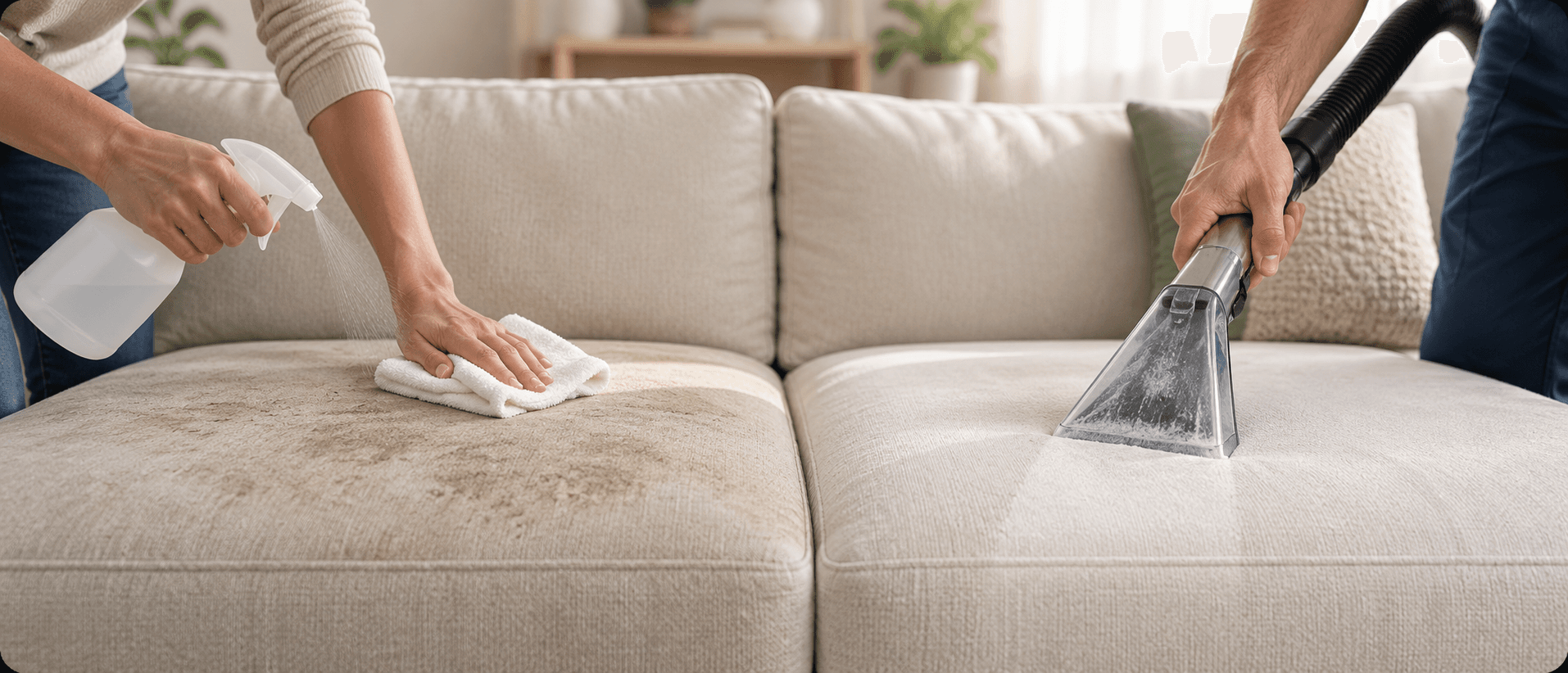
Professional Sofa Cleaning vs. DIY Sofa Cleaning: Which Is Worth It?
Okay, so you’re standing there looking at your sofa, maybe at a stain that just won’t quit, or maybe just at the general “this doesn’t feel fresh anymore” feeling, and you’re trying to decide: do I just clean this myself, or do I call in someone who does it professionally?
That’s a genuinely fair thing to be stuck on. There’s no single right answer for every sofa, because it really comes down to your specific fabric, what caused the mess, and how much you’re willing to risk if it doesn’t go quite as planned. So let’s just talk it through together, the way you would with a friend who happens to know a lot about sofas.
Here’s the short version, so you have it upfront: if you’re dealing with light dust or a spill you caught quickly, cleaning it yourself is usually totally fine. But once you’re looking at deep, ground-in dirt, stubborn old stains, a pet smell that keeps coming back, or a fabric that’s delicate or pricey, that’s usually when bringing in a professional starts to make a lot more sense. Let’s go through why, so you can be at ease with whichever choice you make.
Professional Sofa Cleaning vs. DIY: What’s Actually Different?
Here’s the thing that surprises a lot of people: the biggest difference isn’t really about who’s doing the scrubbing. It’s about how much gets checked and understood before any cleaning even starts.
When you clean your own sofa, you’re usually working off a bit of a guess, maybe a tag you skimmed, a tip a friend once mentioned, or whatever’s under your sink at the time. When a professional comes in, they typically start by actually figuring out what they’re working with: what the fabric is, how it’s handled moisture in the past, and what’s really causing that stain or smell, before a single product touches your cushions.
None of this means DIY is a bad idea, not at all. For everyday upkeep, it’s often exactly the right call. But for the tougher jobs, that extra bit of checking beforehand is usually what makes the difference between “it looks a little better” and “it looks brand new, and nothing got worse along the way.”
When DIY Sofa Cleaning Makes Total Sense
Let’s give DIY the credit it deserves here, because honestly, a lot of everyday sofa care doesn’t need a professional at all.
You’re probably in good shape handling it yourself if:
- The dirt is light: just everyday dust and grime that a good vacuum and a damp cloth can handle
- The spill is fresh: you caught that coffee or juice spill within a few minutes and blotted it right away
- You’re doing routine upkeep: vacuuming, fluffing cushions, wiping down the arms and headrest area
- Your fabric is made for it: some upholstery is specifically designed to be spot-cleaned with water or a mild soap
- The manufacturer’s given the green light: if the care tag or manual says at-home cleaning is fine, that’s a nice confidence boost
If your sofa fits into any of these, there’s really no need to spend money you don’t have to spend. A little regular care goes a long way, and it’s often what keeps your sofa from ever needing a deep clean in the first place.
Where DIY Sofa Cleaning Can Go Sideways
This is the part people tend to skip, but it’s the most important part. DIY cleaning doesn’t usually go wrong because someone was careless. It goes wrong because of a handful of pretty common, avoidable mistakes. Let’s walk through what actually happens and why, so you know what to watch for.
Over-wetting. It’s easy to think more water or more cleaner means a deeper clean, but it’s actually the opposite. Too much liquid pushes moisture down into the cushion filling, where it’s much harder to dry out, and that’s what causes problems that show up days later instead of right away.
Water marks and rings. Ever noticed a faint ring show up after you thought you’d cleaned a stain? That happens because water dries unevenly, carrying dirt or leftover cleaning residue out to the edges of the wet spot as it evaporates. The stain didn’t actually leave, it just moved.
Color bleeding. Some dyes aren’t fully colorfast, meaning they can loosen or run when they get wet, especially with the wrong cleaning product. Once the color bleeds, it’s really hard to undo.
Fabric shrinkage. Certain materials, especially natural fibers, can shrink or pucker if they get wetter than they’re built to handle. You’ll usually notice this as a slightly warped or tight-looking cushion.
Product residue. If a cleaning solution isn’t fully rinsed out or extracted, it leaves behind a sticky film. And that film doesn’t just look a bit off, it actually attracts more dirt afterward, so your sofa can get dirty again faster than before you started.
Stains spreading instead of lifting. Rubbing a stain instead of gently blotting it, or reaching for the wrong product, can push it deeper into the fibers and actually widen the area, rather than lifting it out.
Slow drying and trapped moisture. Sofas are pretty dense: cushions, padding, sometimes wood or foam underneath. Without good airflow or proper extraction, water can sit trapped for a long time, and that’s a direct path to musty smells and, in worse cases, mold or mildew. The EPA’s guidance on indoor moisture and mold is worth a skim if you’ve ever had a piece of furniture stay damp for more than a day, the same “dry it out fast” logic applies just as much to a cushion as it does to a carpet or a wall.
The wrong product for the fabric. Not every “upholstery cleaner” you find on a store shelf works safely on every fabric. Using the wrong one can leave discoloration, stiffness, or damage that’s worse than whatever you were trying to clean up in the first place.
None of this means you’re doomed if you try DIY, it just means these are the real risks worth knowing about, so you can either avoid them or recognize when a job might be a bit bigger than a spray bottle can handle.
What Professional Sofa Cleaning Actually Does Differently
A professional job generally follows a more thoughtful, structured process than most people realize:
- Inspection: a good look at the sofa’s overall condition and any existing damage or problem areas before anything begins
- Fabric identification: figuring out exactly what the upholstery is made of, since that decides which methods and products are safe to use
- Checking the cleaning code: most furniture carries a code (W, S, WS, or X) that tells a cleaner what it can safely handle
- Pre-treatment: loosening up dirt and prepping specific stains before the main clean begins
- Stain treatment: targeted care for the tougher spots, rather than treating the whole sofa the exact same way
- Cleaning and extraction: the main cleaning step itself
- Moisture control: carefully managing how much liquid goes into the fabric and cushions, to avoid those over-wetting issues we talked about earlier
- Drying: helping everything dry properly and efficiently, so moisture doesn’t get trapped
- Odor treatment: for pet smells or general staleness, when it’s needed
This general sequence lines up with what’s laid out in the IICRC’s S300 standard for professional upholstery cleaning, the industry reference most reputable cleaning technicians are trained against. It’s not a marketing checklist, it’s closer to an actual set of professional guardrails.
Here’s the takeaway though: it’s not really about the checklist itself. It’s that each step actually informs the next one. A technician who already knows the fabric type and the cleaning code isn’t guessing at what to use, they’re working from real information.
Does Professional Cleaning Actually Remove More Dirt and Stains?
Generally speaking, yes, but it’s worth understanding why instead of just taking that on faith.
A lot of at-home cleaning really only reaches the surface, whatever a cloth or handheld cleaner can get to. Professional cleaning is typically built to go deeper, addressing things like:
- Dirt and grime that’s worked its way into the fibers over time, not just what’s sitting on top
- Body oils that build up in high-touch spots like armrests and headrests
- Food and drink stains that have had time to really set in
- Pet stains, along with the odor-causing residue that often tags along with them
- Allergens and dust that settle deep into the cushions
- Older stains that a DIY attempt has already tried, and failed, to fully lift out
Now, here’s the honest part, and it matters: professional cleaning isn’t magic. Depending on the age of a stain, what caused it, and the fabric it’s on, some stains may fade a lot without disappearing entirely. Anyone who promises they can remove 100% of every stain, every single time, isn’t being fully upfront with you. A good cleaning company will tell you honestly, before they start, whether a particular stain is realistically likely to come out.
If pet stains are part of what you’re dealing with, it’s worth knowing that the surface stain and the lingering odor are often two separate problems. Our pet odor remediation service is built specifically around that second piece, since a general upholstery clean doesn’t always reach what’s soaked down into the cushion filling.
Your Sofa’s Fabric Matters More Than You’d Think
One of the biggest mistakes in sofa cleaning, whether it’s DIY or not, is treating every fabric like it’s the same. What works beautifully on one sofa can genuinely wreck another. This is exactly where those little cleaning code tags earn their keep:
- W: safe to clean using water-based cleaning solutions
- S: should only be cleaned with a solvent-based cleaner, since water can cause shrinking, staining, or watermarks
- WS: can typically be cleaned with either water-based or solvent-based solutions
- X: should only be vacuumed or gently brushed, no liquid cleaning at all without a professional’s help
If you’ve never actually checked your sofa’s tag, it’s worth two minutes to find it (usually tucked under a cushion or on the frame) before you clean anything at home. And if that tag is missing, faded, or just confusing, that alone is a completely reasonable reason to call in a professional instead of guessing.
DIY vs. Professional Sofa Cleaning: Cost, Time, and Results
Here’s a simple side-by-side to help you picture how the two options actually compare.
| Factor | DIY | Professional |
|---|---|---|
| Upfront cost | Lower | Higher |
| Time required | Your own time and effort | Minimal effort on your part |
| Equipment | Household items or rented machines | Professional-grade equipment |
| Stain treatment | Depends on the stain and product used | Specialized, targeted treatment |
| Risk of fabric damage | Higher if done incorrectly | Lower, since fabric is assessed first |
| Deep cleaning | Limited by available equipment | Typically goes deeper, depending on method used |
| Pet odors | Can be difficult to fully resolve | Specialized treatment may help |
When Is Professional Sofa Cleaning Really Worth It?
If you’re still weighing it, here’s a simple way to think it through. Professional cleaning tends to be worth considering when:
- Your sofa is heavily soiled, not just a bit dusty
- You’re dealing with old or stubborn stains that haven’t budged with spot cleaning
- There’s a pet odor that just keeps coming back
- You’ve already tried cleaning it yourself and it didn’t fully work
- The upholstery is delicate, expensive, or just not something you want to risk experimenting on
- You’re genuinely unsure how to safely clean that particular fabric
- The sofa’s been over-wetted before and you’d rather not repeat that
- You want a noticeably deeper clean than your usual routine maintenance gives you
If none of these really apply to you right now, DIY is probably the right call. But if two or three of them sound familiar, it’s worth at least getting a professional’s opinion before reaching for a spray bottle. Ourupholstery cleaning team can take a look and tell you honestly which camp your sofa falls into.
How Often Should You Really Get Your Sofa Professionally Cleaned?
There’s no single number that fits every household, and anyone who tells you “every six months, no exceptions” is oversimplifying things a bit. How often you need a professional clean really comes down to your own situation:
- Pets: shedding, accidents, and odor all mean you’ll likely need cleaning more often
- Kids: spills, snacks, and everyday wear add up faster than you’d think
- Allergies: if anyone in your home deals with allergies or asthma, more frequent deep cleaning can genuinely help with dust and dander
- Daily use: a sofa that gets used constantly needs more attention than one in a rarely-used formal living room
- Smoking: smoke residue builds up and usually calls for more frequent cleaning
- Fabric type: some materials show dirt and hold onto odors faster than others
- How dirty it looks: sometimes your sofa is honestly just telling you it’s time
- Manufacturer recommendations: always worth a quick check, since some brands do suggest a general timeframe
For a lot of households, once or twice a year is a reasonable rhythm, but really, your own specific mix of the factors above is what should guide the decision, not a one-size-fits-all rule.
So, Should You Clean Your Sofa Yourself?
It doesn’t have to be an either-or decision. DIY cleaning makes a lot of sense for routine upkeep and fresh spills on fabric that’s suited to it, and there’s really no reason to spend money on something a damp cloth can take care of. But once you’re dealing with heavy soil, stubborn old stains, lingering odors, delicate upholstery, or a sofa you truly don’t want to risk damaging, that’s usually when professional cleaning starts to pay for itself, both in how it looks and in your own peace of mind.
And if you’re still not sure which camp your sofa falls into, that uncertainty is a pretty good sign it’s worth getting a second opinion. The team at Pro Care Texas can take a look, give you an honest read on what your sofa actually needs, and let you know what kind of results are realistic, before any cleaning even starts. No guesswork, no pressure, just an honest conversation about your sofa.