
Professional Sofa Cleaning vs. DIY Sofa Cleaning: Which Is Worth It?
You just spilled something on your sofa. Before you reach for whatever’s under the sink, know this: the first five minutes matter more than any product you use afterward. Most “ruined” sofas we see weren’t ruined by the spill. They were ruined by what someone did to it right after.
Here’s how to handle it the right way, stain by stain.
What to Do When You Spill Something on Your Sofa
Move fast, but don’t panic. A fresh spill is almost always easier to manage than one that’s had time to set.
- 1. Remove excess material: If it’s food, lint, or anything solid, lift it off the fabric with a spoon or the edge of a cloth. Don’t wipe it. Wiping just grinds it deeper into the weave.
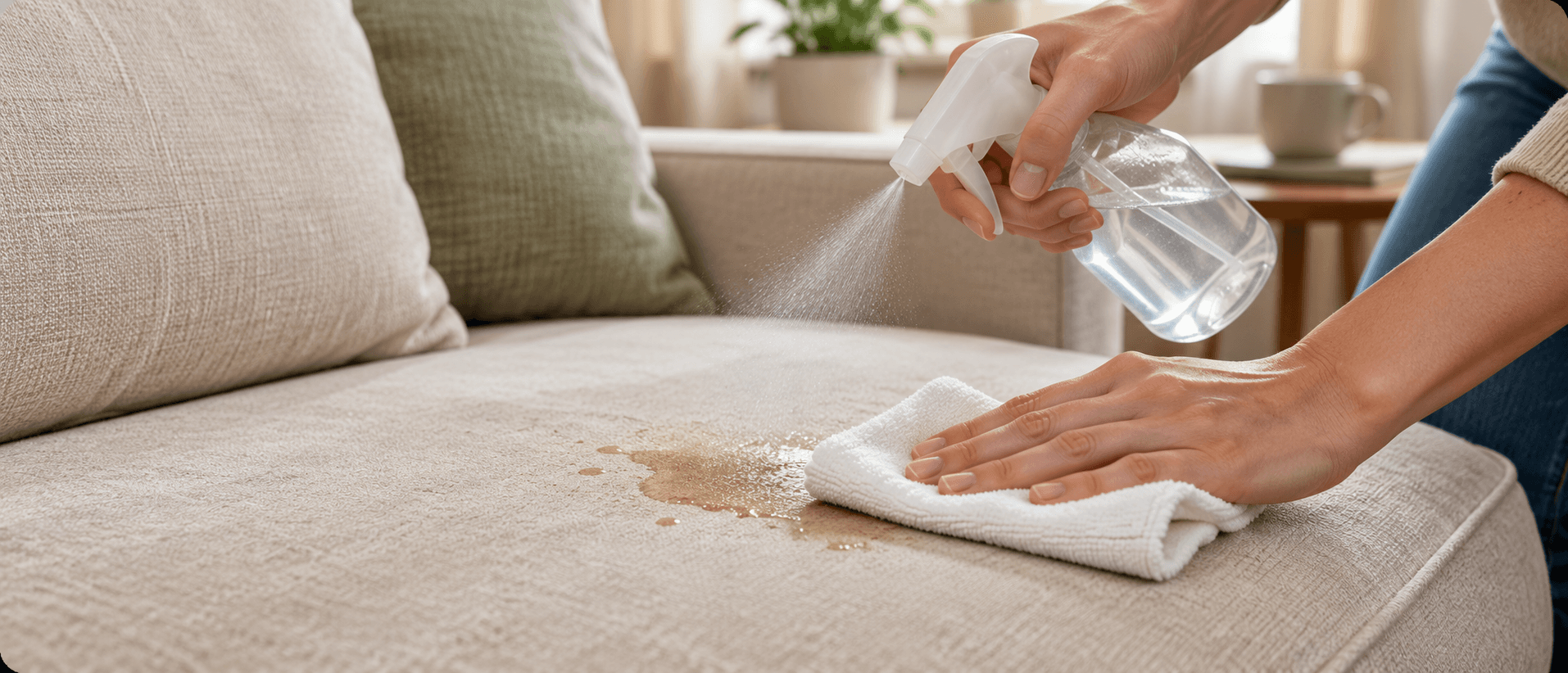
- 2. Blot, don’t rub: Press a clean, absorbent cloth straight down onto the spill and lift it away. Repeat with a clean section of the cloth each time. Rubbing spreads the stain outward and pushes it further into the fibers.
- 3. Check the cleaning code first: Before you touch the spot with water or any product, find the tag on your cushion or under the frame. It’ll tell you what your sofa can actually handle.
- 4. Test before you treat: Try your chosen method on a hidden spot, like the back of a cushion or the underside of an arm, and wait a few minutes to see how the fabric reacts.
- 5. Don’t soak it: A little moisture helps. A lot of moisture creates a second problem: rings, warping, or mildew underneath the cushion.
- 6. Let it dry completely: Wet fabric almost always looks cleaner than it is. Give it time and good airflow, then check again.
Check Your Sofa’s Cleaning Code Before Treating a Stain
That little tag with a single letter on it isn’t decoration. It’s the manufacturer telling you exactly what your fabric can survive.
- W — Water-based cleaners are generally fine.
- S — Water can damage this fabric; a solvent-based cleaner is meant to be used instead.
- WS — Either can work, but check the manufacturer’s specific guidance.
- X — Vacuum only, or leave it to a professional. This fabric isn’t meant for home cleaning methods.
One important note: this code is a starting point, not a green light to try every DIY method you’ve read about. Manufacturer instructions always take priority over general advice, including this article.
How to Remove Common Sofa Stains
Every stain has a cause, an immediate response, a few things to avoid, and a point where it’s smarter to call in help. Here’s how that breaks down for the stains we see most often.
Coffee and Tea Stains
Blot immediately with a dry cloth, working from the outside of the stain inward so you’re not spreading it wider. Check your fabric code before applying anything else, and skip the temptation to scrub. Tannins in coffee and tea bond to fabric fast, and aggressive rubbing sets them deeper. A stain that’s had a day or two to dry is noticeably harder to lift than one you catch right away, which is really the whole theme of this article.
Food and Sauce Stains
Get any solid food off the fabric first, then blot whatever liquid is left behind. Sauces and dressings often carry oil, so pay attention to whether you’re dealing with a straight food stain or a grease stain underneath it. That changes what comes next.
Grease and Oil Stains
Grease doesn’t respond to water the way most household stains do, since oil and water don’t mix. This is the category where people reach for a random pantry hack, and we’d rather you didn’t. Not every “safe” household product is actually safe for every upholstery fabric. If you’re not sure your cleaning code allows it, blot what you can and leave the rest alone until you know more.
Wine and Colored Drinks
Speed matters most here. Blot straight down and resist any urge to dab in a circular motion. That spreads the pigment further into the fibers and widens the stain instead of shrinking it. The goal in the first few minutes is containment, not removal.
Ink Stains
Ink is unpredictable. Ballpoint, gel, and marker inks all behave differently, and how they react also depends on your fabric. This is one spot where we’d say: don’t start experimenting with solvents unless your upholstery’s care instructions specifically allow it. Guessing wrong here can set the stain permanently or bleach the fabric around it.
Pet Urine and Pet Stains
This one deserves extra attention because it’s rarely just a surface issue.
What you can see on the cushion is often the smaller problem. Pet urine soaks through fabric into the cushion foam and sometimes the frame underneath, where surface cleaning can’t reach it. That’s why a spot that looks clean can still smell like it wasn’t touched.
We won’t tell you a quick home treatment will fully remove deep-set pet odor, because for a lot of cases, it won’t. If you’ve cleaned the visible spot and the smell keeps coming back, that’s usually a sign the problem has moved past what surface treatment can fix. At that point, professional pet odor treatment is worth looking into before the odor works its way further into the furniture.
Why Rubbing a Sofa Stain Can Make It Worse
It’s instinct to scrub at a stain. It feels like progress. It’s usually the opposite.
Rubbing pushes whatever caused the stain deeper into the fibers instead of lifting it out. It spreads the stain sideways, so a small spot becomes a bigger, blurrier one. It also stresses the individual fibers, which can fray or flatten them, changing how that section of fabric looks even after the stain itself is gone. On some materials, especially anything with a nap like velvet or microfiber, aggressive rubbing leaves a visible worn patch that has nothing to do with the original spill.
Blotting works with the fabric. Scrubbing works against it.
Common Sofa Cleaning Mistakes to Avoid
A few habits show up again and again in sofas that come to us with damage beyond the original stain:
- Using too much water, which can soak into the cushion and take days to fully dry
- Applying more cleaning product than the instructions call for
- Scrubbing instead of blotting
- Skipping the care label because it seems easier to just try something
- Mixing cleaning chemicals, which can react in ways that damage fabric or create fumes
- Using heat, like a hairdryer, without checking whether the fabric can handle it
- Grabbing a product made for carpet or clothing and assuming it’ll work the same on upholstery
- Trying a new product every time the old one “doesn’t work,” without ever figuring out what the stain actually is
- Putting cushions back in place before the fabric is fully dry
Most of these come from good intentions. They just don’t account for how upholstery fabric actually behaves.
What If the Stain Is Already Set?
Not everyone finds this article five minutes after a spill. Maybe it’s a stain that’s been there for months, or one you inherited with a secondhand piece.
Set-in stains take a different approach. Don’t keep layering new products on top of old ones. That usually just adds a new problem on top of the original. Don’t scrub harder because gentle blotting “isn’t working.” Instead, try to identify what caused the stain and what fabric you’re working with, since that determines what actually has a chance of helping.
Worth knowing honestly: some set-in stains have already changed the fabric itself, whether through fading, fiber damage, or a chemical reaction with whatever caused the stain. Complete removal isn’t always possible, even with professional treatment. A professional assessment can at least tell you what’s realistic before you spend more time on it.
When DIY Stain Removal Isn’t Worth the Risk
There’s a point where continuing to experiment costs you more than it saves. Consider calling a professional if:
- The fabric is delicate, like silk or velvet, or anything without a clear cleaning code
- You genuinely can’t find or read the cleaning code
- The stain is old or has been treated multiple times already
- It covers a large area rather than a small spot
- Pet odor keeps returning after you’ve cleaned the surface
- You’ve already tried a few things and nothing’s improved it
- It’s a sofa you paid a lot for, or one you plan to keep for years
- The fabric has started to discolor or look different than the surrounding area
- An earlier cleaning attempt left water marks or rings
None of these mean you did anything wrong. They just mean the problem has moved past what a cloth and a bit of patience can solve.
How Professional Upholstery Cleaners Handle Difficult Stains
When we take on a stain that’s beyond home treatment, the process isn’t a mystery. It’s just more thorough than what’s practical to do yourself.
We start by inspecting the piece and identifying the fabric, since that determines everything else. From there we identify the stain itself where possible, because coffee, grease, and pet urine all call for different treatment. We select a method suited to both the fabric and the stain, clean it, then control and extract the moisture so the cushion isn’t left oversaturated. Drying is done carefully, with attention to how the piece is ventilated, and we inspect the results before calling the job finished.
It’s a longer process than a quick spray and blot, but that’s the point. It’s built to treat the stain without creating new problems along the way.
Conclusion
A fresh spill on your sofa isn’t a lost cause. It’s a timing problem. Act fast, blot instead of scrub, and respect what the cleaning code tells you, and you’ll handle the vast majority of spills without any lasting mark. The stains that turn into real damage are almost always the ones that got scrubbed, soaked, or layered with three different products before anyone stopped to think it through.
If a stain has already set, or you’re dealing with pet odor that keeps coming back no matter what you try, that’s not a sign you failed. It’s just a sign the job has outgrown a cloth and a bottle of spot cleaner.